C-Section Recovery, Week by Week: What to Expect (and What Helps at Each Stage)
A cited, week-by-week C-section recovery timeline: what's normal at each stage, what tends to help, and the signs that mean it's time to call your provider.

Quick summary
A cited, week-by-week C-section recovery timeline: what's normal at each stage, what tends to help, and the signs that mean it's time to call your provider.
Key takeaway
Take it one day at a time. You're doing better than you think.
The spirit
“It gets better, promise.”
BloomCare Editorial
Trusted pregnancy and postpartum educators
Nobody hands you a printed schedule on your way out of the hospital after a C-section: just a discharge folder, a follow-up appointment card, and a vague sense that "six weeks" is the number everyone keeps repeating. Six weeks isn't wrong, exactly. It's just not the whole picture, and the days inside it can look wildly different from each other.
This is our research-backed c-section recovery timeline week by week, cited to ACOG, Cleveland Clinic, and Mayo Clinic, and built around what's actually happening to your body at each stage. It's the companion piece to our C-section recovery kit checklist, which covers what to have on hand; this page covers when you'll actually need it.
ACOG notes that roughly 1 in 3 U.S. births is now a cesarean, and yet most "what to expect after c-section" content still treats it as a footnote to vaginal birth instead of its own recovery, with its own timeline.
BloomCare shares product research and education, not medical advice. Every recovery is different, and your provider knows yours best. For anything that worries you, that's always the right call.
How long does c-section recovery take?
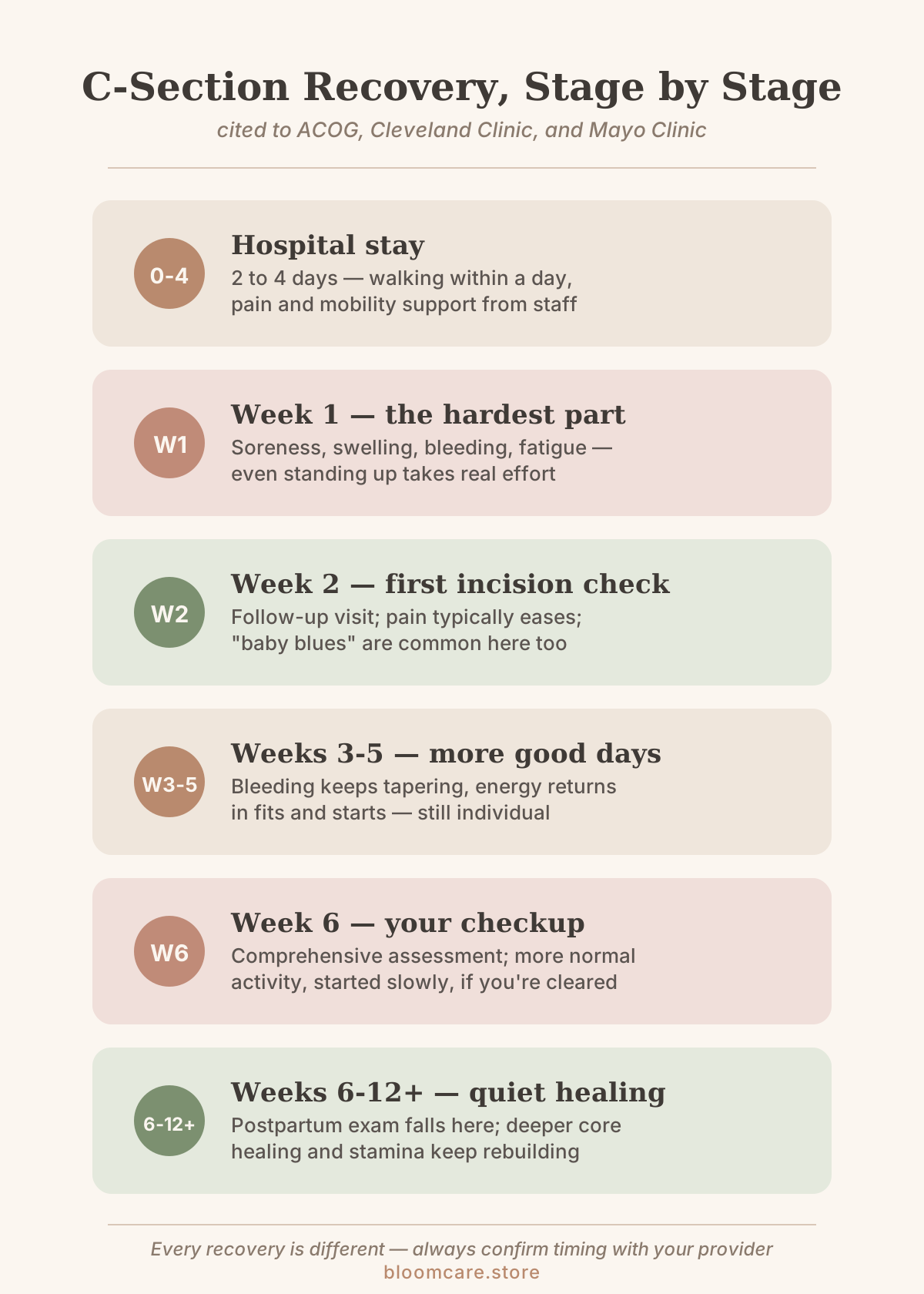
A C-section is major abdominal surgery, so recovery isn't a single date: it's a series of stages. Expect the sharpest pain and fatigue in week one, noticeable improvement by week two, and most restrictions lifted around six weeks, while deeper core healing continues quietly for months afterward.
Here's what each of the c-section recovery stages actually looks like, cited to ACOG, Cleveland Clinic, and Mayo Clinic, not averaged into one vague number.
Your c-section recovery timeline, week by week
Hospital stay: days 0–4
ACOG is specific here: a hospital stay after a cesarean is usually 2 to 4 days, depending on the reason for your surgery and how your body responds. During that stretch, Cleveland Clinic notes staff are managing your pain, checking your nutrition and hydration, helping you move safely, and giving you room to start bonding with your baby.
Getting up and walking within the first day is part of the plan, not just a suggestion: it lowers your risk of blood clots, even though it's the last thing a fresh incision wants to do.
C-section recovery week 1: the hardest part
Cleveland Clinic is direct about this: the first week is the most tender part of recovery. Soreness around the incision, swelling, bleeding, cramping, and fatigue are all typical, and standing up, laughing, coughing, and walking can take real effort.
Bleeding is expected too: Cleveland Clinic and Mayo Clinic agree it can last four to six weeks postpartum, heaviest in the first few days. Call your provider if you're soaking through a pad in an hour.
For pain, Mayo Clinic suggests avoiding anything heavier than 10 to 15 pounds for the first couple of weeks, and ACOG's postpartum pain guidance covers your real options (from over-the-counter acetaminophen and ibuprofen to prescribed medication), worth discussing with your provider before you leave the hospital.
Week 2: your first incision check
Cleveland Clinic notes your first postpartum follow-up, usually scheduled for week two, is when a provider actually looks at your incision and confirms it's healing the way it should. Pain typically eases from here, though soreness and occasional cramping are still normal.
This is also when hormonal "baby blues" tend to show up. Cleveland Clinic is clear that low mood and tearfulness are common in this window, but persistent sadness or hopelessness is worth mentioning to your provider rather than waiting out on your own.
Weeks 3–5: more good days than bad
There's no single tier-1 source that maps this stretch day by day: recovery is genuinely individual here. What holds across the sources we cite throughout this timeline is the shape of it: bleeding keeps tapering within that four-to-six-week window, energy returns in fits and starts, and the incision itself moves from tender to just noticeable.
ACOG flags a specific list of symptoms that mean call your provider right away during this stretch, not wait and see: more on that below.
Week 6: your checkup, not a finish line
Cleveland Clinic describes week six as a comprehensive recovery assessment: if your pain has eased and your incision looks right, your provider will likely clear you for more normal activity. Mayo Clinic is specific that sex and exercise both fall into this window, and both should start slowly and build up rather than resume all at once.
Weeks 6–12+: healing continues quietly
Getting cleared at six weeks doesn't mean you're fully healed: it means the visible, surface-level healing has caught up. Mayo Clinic notes you shouldn't exercise beyond walking, or lift anything heavier than your baby, until six to eight weeks in, and a complete postpartum exam can land anywhere in the six-to-twelve-week window. Easing back in gradually past that point is the norm, not a sign anything went wrong.
healing on someone else's schedule is its own kind of hard
Call your provider if…
Most of a c-section recovery timeline is unremarkable in the best way: tender, slow, gradually easier. But ACOG is specific that some symptoms mean call your ob-gyn right away, not keep an eye on it:
- Fever
- Chills
- Leg pain or swelling
- Draining or leakage from your incision
- Heavy bleeding (soaking a pad in an hour)
- Worsening pain instead of gradual improvement
- Shortness of breath
CDC's Hear Her campaign adds a broader list worth knowing, since some of these can show up any time in the year after delivery: a severe headache that won't go away, vision changes, extreme swelling in your hands or face, chest pain or a fast-beating heart, severe belly pain, or thoughts of harming yourself.
None of these are a wait-and-see situation, and none of them are yours to diagnose alone: that's what your provider is for.
What helps at each stage
The gear doesn't fix the timeline, but the right item at the right stage makes it more bearable. Two of our dedicated guides map onto specific points above:
Around week one, once you're upright and moving, many people add a belly band or abdominal binder for extra support standing and walking: our belly band buying guide covers how to choose one and, just as importantly, when to stop wearing it.
Once your incision has fully closed, not before, some people look into silicone scar strips. Our silicone scar sheets guide covers the evidence behind them and exactly how to time starting one.
Everything else (the loose clothing, the incision pillow, the peri bottle you'll still need) lives in our complete C-section recovery kit checklist.
Questions mamas actually ask
What's the hardest week of c-section recovery?
For most people, it's week one. Cleveland Clinic describes it as the most tender stretch, with soreness, swelling, fatigue, and bleeding all overlapping at once, before your body has had any real time to start healing. Even small movements (standing up, laughing, getting out of bed) can take more effort than you expected.
How long does c-section recovery really take?
Mayo Clinic puts full recovery around four to six weeks, with a complete postpartum exam landing anywhere in the six-to-twelve-week window after that. Deeper healing (core strength, stamina, the abdominal muscles themselves) continues quietly well past those visits, sometimes for months, which is normal rather than a sign of slow healing.
Is it normal to still be sore at six weeks?
Some tenderness around your six-week mark isn't unusual. Cleveland Clinic notes your six-week visit is when a provider assesses whether pain has eased enough to resume more normal activity: if it hasn't, that's a conversation for that appointment, not something to push through alone.
When can I start driving again after a C-section?
There's no single tier-1 number here. Mayo Clinic frames it around ability rather than a date: your provider may restrict driving until you can turn your body and apply pressure to the pedals without pain or hesitation, worth confirming directly with them.
When should I call my doctor instead of just pushing through?
ACOG is specific here: call right away for fever, chills, leg pain, draining or leakage from your incision, heavy bleeding, worsening pain, or shortness of breath. CDC's Hear Her campaign adds severe headache, vision changes, chest pain, and severe belly pain to that list: any of these warrant a call, not a wait.
slow is still forward
Keep reading
- Your C-section recovery kit: the complete checklist: everything to have on hand, mapped to the stages above
- Belly bands after a C-section: how to choose one: for the week-one support layer
- Silicone scar sheets after a C-section: when to start: for once your incision has closed
Last reviewed: July 14, 2026 by the BloomCare Editorial Team. We re-review guides every 90 days.
Sources
continue reading
you might also like