Silicone Scar Sheets After a C-Section: When to Start and How to Choose
Silicone scar sheets after a C-section: the real evidence, exactly when providers typically clear you to start, and how to choose sheets vs. gel.
Quick summary
Silicone scar sheets after a C-section: the real evidence, exactly when providers typically clear you to start, and how to choose sheets vs. gel.
Key takeaway
Take it one day at a time. You're doing better than you think.
The spirit
“It gets better, promise.”
BloomCare Editorial
Trusted pregnancy and postpartum educators
Somewhere around your follow-up appointment, someone mentions silicone scar sheets, or you scroll past an ad for one, and a new question gets added to the pile: should you actually be doing something about this scar? Nobody warns you that healing from a C-section keeps asking things of you long after the hospital bag gets unpacked.
This is our research-backed guide to silicone scar sheets after a C-section: what the evidence actually says, exactly when it's safe to start, and how to choose between a sheet and a gel once you're cleared. It's the deeper companion to the incision care section in our complete C-section recovery kit checklist, which covers everything else worth having on hand.
Most product pages simply say "clinically proven" and stop there. We looked at what the actual research says, including the parts that are still genuinely uncertain, so you can decide if it's worth adding to an already full routine.
BloomCare shares product research and education, not medical advice. Every recovery is different, and your provider knows yours best. For anything that worries you, that's always the right call.
The short answer: most providers clear silicone scar sheets or gel only once your incision has fully closed, with no scabbing, discharge, or open areas, which ACOG notes takes a few weeks for most people. There's no single universal day count: confirm the exact timing with your provider at a follow-up visit, since healing pace genuinely varies.
What silicone scar sheets (and gel) actually do
Silicone scar sheets and silicone gel are two forms of the same idea: a thin layer of medical-grade silicone worn directly over a healed scar. Cleveland Clinic explains that the self-adhesive sheets are meant to be worn every day, all day, usually for several months, and are reported to help manage a scar's size, redness, hardness, and itchiness over time.
That's a real, cited claim, but it comes with an honest asterisk. A Cochrane systematic review of the actual research found that while some trials showed improvements in scar thickness and color, most of the underlying studies were of poor quality, and the reviewers concluded it's genuinely uncertain how much silicone sheeting helps. Cleveland Clinic's own language is careful too: applying it "may" make a scar smaller, not that it will.
None of that means skip it. Silicone is still one of the most commonly recommended options providers reach for, and it's low-risk on fully healed skin. It just means "do silicone scar sheets work" doesn't have a guaranteed yes, and anything promising certainty is overselling the research.
healing doesn't need to be flawless to be enough
When to start scar treatment after a C-section
This is where the safety nuance actually matters. Silicone sheets and gel are healed-skin products, never open-wound ones. ACOG is specific that it takes a few weeks for your abdomen to heal after a cesarean, and that some pain or numbness around the incision during that stretch is typical.
In practice, that means waiting until your incision has fully closed: no scabbing, no open areas, no discharge. There's no single tier-1 number for the exact day, since healing pace is genuinely individual. The most reliable move is asking at your postpartum follow-up, when a provider is actually looking at the incision, rather than guessing off a calendar.
If you want the fuller week-by-week picture of what's healing when, our C-section recovery timeline maps the whole stretch in more depth. This page picks up specifically at the "incision's closed, now what" point.
Silicone sheets vs. gel scars: how to choose
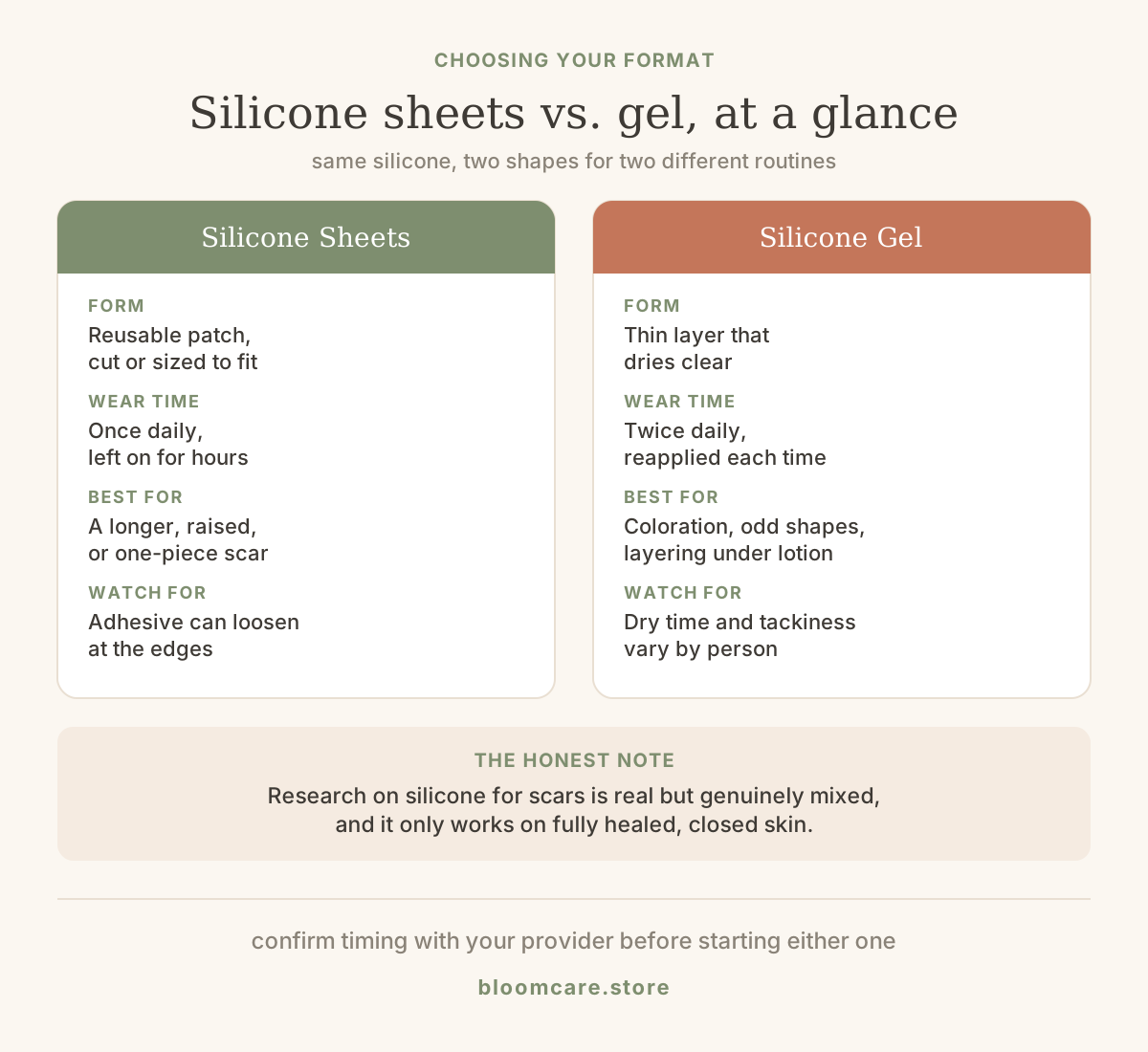
Once you're cleared to start, the real decision is shape, not brand. A silicone sheet is a reusable patch you leave on for hours at a time. A silicone gel is a thin layer you paint on and let dry, usually twice a day.
In the reviews we read across both formats, the tradeoff shows up consistently. Sheets hold gentle, constant pressure across the whole scar, which people managing a longer or raised incision line tend to prefer. Gel dries invisible, works over odd-shaped areas, and layers on top of lotion in a way a sheet's adhesive doesn't tolerate well. One reviewer who'd used both put it simply: sheets add pressure if you're worried about a raised or thickened scar forming, gel is the better fit if coloration is the main concern.
Neither format is more "medical" than the other. It's genuinely a fit question: how much of your incision needs covering, how you feel about a visible patch under clothing, and whether a twice-daily gel routine will realistically survive everything else a newborn already demands.
A quick, honest note: if you buy through links in this journal, BloomCare may earn a small commission, at no extra cost to you. Nobody pays for a place on our lists, and our research is done before we ever look at a link.
Our picks, once you're cleared to start
We don't accept sponsorships, and nobody pays for a spot on this list. Facts about each pick come from its own Amazon listing; the verdicts come from the pattern across its reviews, including the one- and two-star ones, which is usually where the honest complaints live.
The C-section scar strips: Frida Mom silicone sheet
What it is: A 6-count pack of medical-grade silicone patches, each 8 inches long, so one patch covers a full C-section incision without piecing together shorter strips. Each patch is reusable for up to about a week before replacing, and the set includes a storage case.
What the reviews say: Across roughly 2,480 ratings, reviewers consistently describe real improvement in how the scar looks and feels over weeks of use, and like that one patch handles a typical incision in one piece. The recurring complaint is adhesion: most say it holds through a shower, but a repeating minority say it doesn't stick well or irritates skin at the edges.
Worth it if: your incision is fully healed and on the longer side, and you'd rather apply something once and leave it than remember a twice-daily routine. Skip it if: your incision isn't healed yet (this is a healed-skin product only, never for open or scabbed skin), or you'd rather cut a roll of tape to your exact length for less per inch.
See the Frida Mom C-section silicone strips
The silicone gel: ScarAway Silicone Scar Gel
What it is: A 10-gram tube of clear silicone gel, also sold in larger sizes, applied as a very thin coat directly on the scar and left to air-dry, twice daily. The listed ingredients are polysiloxanes and silicon dioxide: true silicone, not a botanical scar cream.
What the reviews say: Across roughly 6,190 ratings, Amazon's own review synthesis centers on real, gradual fading of scar appearance with consistent twice-daily use, plus reviewers who like that it dries invisible instead of showing as a visible patch. The honest mixed pattern is texture and dry time: smooth and quick for many, tacky with up to a two-hour dry time for others, plus a repeating complaint that the small tube feels pricey for the amount.
Worth it if: your scar is more about coloration than raised texture, or you want something that dries clear and works under clothing without a visible patch. Skip it if: your scar is visibly raised rather than just discolored (a sheet's steady pressure is the better match), or a twice-daily reapplication routine won't survive real life with a newborn.
See the ScarAway silicone scar gel
Which one for whom
If your incision is long, raised, or you'd rather deal with a routine once and forget it, the Frida Mom silicone sheet is the straightforward pick. If you're more concerned with redness or discoloration than texture, or you want something invisible under clothes and compatible with your regular lotion, the ScarAway gel fits better. Plenty of people who can manage it use a sheet overnight and a thin layer of gel during the day, though that's a bigger routine than most exhausted new parents can realistically keep up.
How to use silicone scar sheets or gel
Whichever format you choose, the basics stay the same:
- Confirm with your provider that your incision has fully closed.
- Wash and dry the area gently before each application.
- For a sheet, press it smoothly over the scar and start with just a few hours of wear, building up to longer stretches as your skin adjusts.
- For a gel, apply a very thin layer and let it air-dry completely before getting dressed.
- Expect to keep it up for a while: Cleveland Clinic notes that self-adhesive sheets are typically worn every day, all day, for several months or longer.
- Stop and check with your provider if the area gets newly irritated, itchy, or looks different than you'd expect.
Call your provider if…
A scar treatment should never be the thing masking a real problem underneath it. ACOG is specific that these symptoms mean call your ob-gyn right away, whether or not you've started using anything on the scar:
- Fever
- Chills
- Leg pain or swelling
- Draining or leakage from your incision
- Heavy bleeding
- Worsening pain instead of gradual improvement
- Shortness of breath
The CDC is specific too about what a surgical site infection can look like: redness and pain around the area, cloudy fluid draining from the wound, or fever. None of these are a "wait and see if the silicone helps" situation, and none of them are yours to diagnose alone.
Questions mamas actually ask
Do silicone scar sheets really work?
The honest answer is probably, for some people, but the research is weaker than most product pages let on. Cleveland Clinic lists it among the treatments providers may recommend, and a Cochrane review of the evidence found real but poor-quality evidence of a benefit. It's a reasonable, low-risk thing to try on healed skin, not a guaranteed fix.
Can I use silicone gel instead of sheets?
Yes. They're the same active ingredient in a different shape. A sheet gives constant, gentle pressure and needs applying once a day; a gel dries invisible and needs reapplying about twice a day. Neither is medically superior, so the choice comes down to your scar and your routine.
What if my incision still looks red or feels tender?
ACOG notes that some pain or numbness around the incision is typical while your abdomen heals. But fever, chills, draining or leakage, heavy bleeding, and worsening pain are never a "keep an eye on it" situation: those call for your provider, not a scar cream.
How long do I need to use silicone scar sheets or gel?
Cleveland Clinic notes that sheets are typically worn every day, all day, for several months or longer, not days or weeks. Older or more established scars may need even longer, so it's worth checking in with your provider if you want to keep going.
Will silicone scar sheets remove my C-section scar completely?
No, and it's worth being skeptical of anything that promises that. The realistic goal is a flatter, softer, less noticeable scar, not an erased one. A C-section scar is evidence of how your baby arrived, not a flaw that needs fixing.
you get to decide if this is worth your time, and that's a complete answer too
Keep reading
- Your C-section recovery kit: the complete checklist: everything else worth having on hand, mapped by stage
- C-section recovery, week by week: what to expect (and what helps at each stage): see exactly where scar care fits into the bigger picture
- Perineal care after birth: a gentle, complete guide to healing: for the fuller postpartum recovery picture, whichever way you delivered
Last reviewed: July 15, 2026 by the BloomCare Editorial Team. We re-review guides every 90 days.
Sources
continue reading
you might also like