Perineal Care After Birth: A Gentle, Complete Guide to Healing
Perineal care after birth, explained gently: the rinse and pat routine, cold and warm relief, stitch care, and the signs that mean call your provider.

Quick summary
Perineal care after birth, explained gently: the rinse and pat routine, cold and warm relief, stitch care, and the signs that mean call your provider.
Key takeaway
Take it one day at a time. You're doing better than you think.
The spirit
“It gets better, promise.”
BloomCare Editorial
Trusted pregnancy and postpartum educators
For nine months, most of the research was about the baby. Then you gave birth, and somewhere between the mesh underwear and the discharge papers it became clear that nobody really walked you through perineal care after birth: what your body just did, what actually helps it heal, and which parts of the folklore you can skip.
This guide is the home base for that whole routine. It pairs with our postpartum recovery kit checklist, which covers supplies for every part of recovery; this page goes deep on one thing, helping your perineum heal.
Everything medical here is cited to sources like ACOG, MedlinePlus, and Cleveland Clinic, and every judgment call gets routed to your provider. Most of this routine runs on warm water and patience, not products.
BloomCare shares product research and education, not medical advice. Every recovery is different, and your provider knows yours best. For anything that worries you, that's always the right call.
What's Actually Happening Down There
Your perineum (the tissue between the vagina and anus) stretches enormously during a vaginal birth, and up to 90% of women tear to some degree in the process, according to Cleveland Clinic. Soreness, swelling, and stinging in the first days are part of the deal even if you didn't tear at all.
Tears are graded in four degrees, and the scale is less scary than it sounds. Per Cleveland Clinic, a first-degree tear is a shallow skin injury that often needs no stitches; the second-degree tear, the most common type, reaches into muscle and is repaired with stitches. Third- and fourth-degree tears extend further and are much less common; they get more involved repairs and closer follow-up.
Two reassuring facts to hold onto. First, childbirth stitches dissolve on their own; nobody is coming at you with a removal kit. Second, Cleveland Clinic notes most mamas feel real relief in about two weeks, with deeper tears taking longer.
You'll also be bleeding these first weeks no matter how the birth went. That's a separate topic with its own rhythm, and our week-by-week postpartum bleeding guide covers what's typical and what you'll want on hand at each stage.
Recovering from a C-section instead? Different incision, different playbook: start with our C-section recovery kit checklist.
Perineal Care After Birth, at a Glance
The whole routine fits on a card. Here is what perineal care postpartum looks like in practice:
- Rinse, don't wipe. Warm water from a squeeze bottle after every bathroom trip, then pat dry with a clean towel; skip toilet paper for the first few days, per MedlinePlus.
- Cold first. Ice packs for 10 to 20 minutes at a time, most effective in the first 24 to 72 hours, per ACOG.
- Warm after the first day. Sitz baths a few times a day once you're 24 hours out.
- Fresh pads, often. Change every 2 to 4 hours to keep the area clean and dry.
- Leave the stitches alone. They dissolve on their own; your job is gentle hygiene, not inspection.
- Head off constipation early. Water and fiber now beat heroics later.
- Take pressure off the area. Sit on a pillow, rest lying down, feed on your side.
- Know your red flags. Fever, worsening pain, or very heavy bleeding mean call your provider (the full list is below).
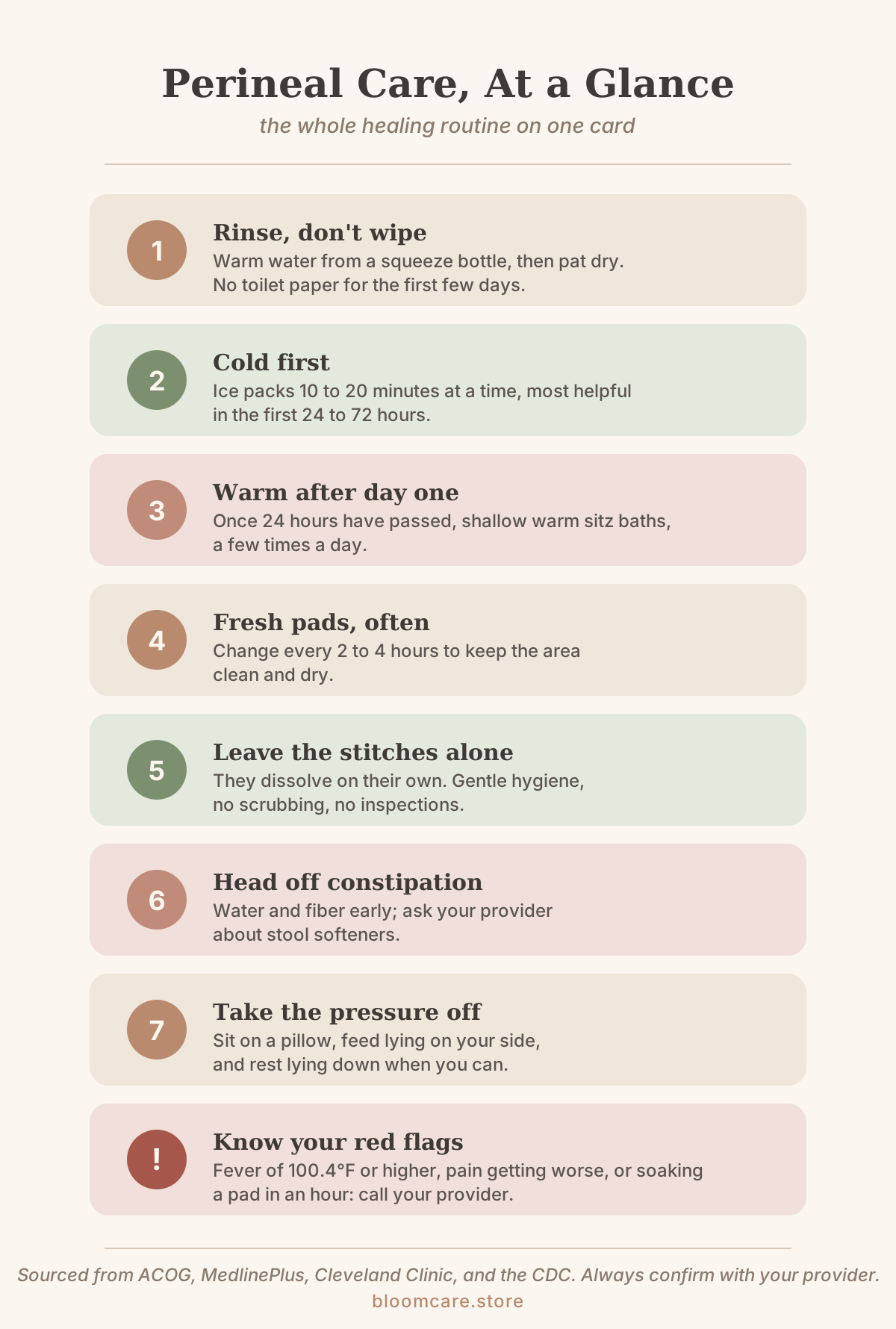
gently does it, mama
The rest of this guide walks through each piece: the bathroom routine, the cold-then-warm comfort layers, stitch care, and the honest timeline. Where a single decision deserves its own page, we link the deeper guide.
The Bathroom Routine: Rinse, Pat, Change
The center of perineal care after birth is almost embarrassingly simple: keep the area clean without scrubbing it. MedlinePlus's aftercare guidance is to spray warm water over the area after you use the toilet, then pat dry gently with a clean towel; toilet paper sits this round out.
The spray bottle matters more than it sounds. ACOG's postpartum pain guidance recommends cleaning with warm water from a squeeze bottle while you're still on the toilet, and notes the warm water can even help get urine flowing when your body is hesitant.
A quick, honest note: if you buy through links in this journal, BloomCare may earn a small commission, at no extra cost to you. Nobody pays for a place on our lists, and our research is done before we ever look at a link.
The hospital will send you home with a basic upright squirt bottle, and for plenty of mamas it does the job. The popular upgrade is an angled design like the Frida Mom upside-down peri bottle, built to spray upside down so the water reaches everything without contorting; across roughly 29,000 ratings, the consistent theme is that it makes exhausted, one-handed bathroom trips easier. An honest minority adds that the free hospital bottle served them just fine.
If you're weighing whether the upgrade earns its spot, our peri bottle comparison breaks down upside-down versus hospital-style, including who can skip it.
Cold First: Ice Packs, Padsicles, and Witch Hazel
For the first day or three, cold is your friend. ACOG recommends applying an ice pack or cold gel pack to the perineal area for 10 to 20 minutes at a time, and notes cold works best in the first 24 to 72 hours after birth.
You can buy perineal ice packs, or make the beloved DIY version: padsicles, which are pads layered with witch hazel and aloe and frozen ahead of time. Our step-by-step padsicle guide covers the recipe; it's also a satisfying late-pregnancy project to hand to a helper who keeps asking what they can do.
Witch-hazel pads are the other comfort measure ACOG names, laid flat on your pad or folded against the sore spot. The classic tub is TUCKS medicated cooling pads, pre-moistened pads with witch hazel as the active ingredient; across roughly 61,800 ratings the pattern is fast, gentle cooling relief, with one recurring gripe that the pads can bunch or shift in your underwear. Reviewers also keep mentioning a trick worth stealing: store the tub in the refrigerator, which they say makes the cooling effect even more soothing.
If astringents aren't your thing, skipping them is a fine choice. The warm-water routine covers the core hygiene need on its own; anything beyond that is comfort, and comfort is allowed to be personal.
Then Warm: Sitz Baths After the First Day
Once the first 24 hours have passed, the emphasis shifts from cooling swelling to soothing sore tissue. MedlinePlus recommends moving from ice to warm baths and sitz baths after that first day, a few times a day: a shallow, warm soak that covers just the perineum.
There is a surprising amount to know about a basin of warm water, including temperature, timing, and why plain water beats the salts and herbs the internet keeps selling. All of it lives in our complete sitz bath guide, the warm half of perineal care after birth.
How to Care for Stitches After Birth
If you have stitches from a tear or an episiotomy, the care plan is mostly the routine you're already doing. Keep the area clean with the rinse-and-pat method, keep it dry between bathroom trips, and let the stitches dissolve on their own, which they will do without an appointment.
What stitches don't need is scrubbing, soap applied directly to the wound, or a daily visual audit that requires gymnastics. Clean, dry, and left alone is the whole assignment.
One gentle addition: MedlinePlus's aftercare guidance includes doing Kegel squeezes throughout the day to support the pelvic floor while it heals. If anything about them hurts, pause and bring it up at your checkup instead of pushing through.
Sitting, Feeding, and Getting Comfortable
There is no prize for toughing it out on a hard kitchen chair. If sitting is uncomfortable, ACOG suggests sitting on a pillow, and notes there are special cushions made for exactly this purpose.
Feeding positions count as perineal care too. ACOG specifically suggests breastfeeding while lying on your side, because it keeps your weight off the perineum while you feed.
And rest is not a luxury item here. Time spent lying down is time your perineum isn't bearing weight, so let the village handle a few things while you're horizontal.
What to Wear While Everything Heals
For the first weeks, the uniform is a pad plus something stretchy that holds it firmly in place. MedlinePlus recommends changing pads every 2 to 4 hours to keep the area clean and dry, so whatever you wear needs to make frequent changes easy.
Whether that means the hospital's mesh underwear, disposable postpartum underwear, or regular underwear with a heavy pad is a genuine decision with real tradeoffs. Our postpartum underwear guide maps all three options to the weeks you'll actually use them.
The First Pee and the First Poop
Nobody warns you how much mental energy these two milestones consume, so consider this your warning and your plan. For urination, ACOG's squeeze-bottle advice does double duty: warm water while you're on the toilet can help trigger the flow when your body is hesitant, and rinsing afterward keeps everything clean without wiping.
For bowel movements, the strategy is to make the first one uneventful before it becomes intimidating. MedlinePlus recommends heading off constipation with plenty of water and fiber, and stool softeners are commonly part of the plan; ask your provider what they recommend for you rather than guessing at the pharmacy.
If things stall, there is a real threshold: MedlinePlus advises calling your provider if you haven't had a bowel movement within about four days.
Perineum Healing After Birth: The Honest Timeline
Here is the arc most recoveries follow. Per Cleveland Clinic, most mamas feel meaningful relief in about two weeks, with deeper tears taking longer. MedlinePlus is honest that complete perineum healing after birth can take many weeks, even when everything is going exactly right.
The six-week mark matters for a different reason. MedlinePlus advises waiting a full six weeks before tampons, sex, or anything else in the vagina, and that's roughly when your postpartum checkup lands; treat that visit as the green-light conversation, not a formality.
Most vaginal birth recovery tips you'll read are really just ways of protecting this timeline: cold early, warm later, clean and dry always, no rushing the finish line. The routine is boring on purpose, and boring is what healing likes.
you're allowed to heal slowly
Call Your Provider If…
Almost everything in this guide is normal-healing territory. The signs below are not, and MedlinePlus, Cleveland Clinic, and the CDC's urgent maternal warning signs converge on the same short list. Call your provider if you notice:
- Pain that's getting worse instead of better
- A fever of 100.4°F or higher
- Bleeding heavy enough to soak a pad in an hour, or passing large clots
- Discharge with a bad odor, or stitches that seem to open up
- Pain or burning when you pee, or losing control of your bowels
- No bowel movement for four or more days
If something feels wrong and it isn't on this list, call anyway. The CDC's guidance is to always mention that you've recently given birth when you do; it changes the questions the person on the line asks.
Questions Mamas Actually Ask
How long does perineal pain last after birth?
For most mamas, the worst of it eases within about two weeks, according to Cleveland Clinic, and deeper tears take longer to feel right. Pain that's getting worse instead of better at any point is a provider call, not a wait-and-see.
Do stitches from a tear or episiotomy need to be removed?
No. The stitches used for childbirth tears dissolve on their own, typically within about six weeks, per Cleveland Clinic. Your only job is keeping the area clean and dry while they do their work.
Can I use toilet paper after a vaginal birth?
Skip it for the first few days. MedlinePlus recommends spraying warm water over the area after using the toilet and patting dry with a clean towel instead, which keeps you clean without dragging anything across healing tissue.
What helps perineal pain the most?
The measures ACOG names are simple: cold packs for 10 to 20 minutes at a time in the first days, witch-hazel pads, warm sitz baths after the first 24 hours, and a pillow or cushion when sitting is uncomfortable. They layer well, and none of them requires the others.
Keep reading
- The postpartum recovery kit checklist: what helps, what's optional, what to skip: the supply side of every routine on this page
- Postpartum bleeding, week by week: what's typical and what you'll need: the other half of early recovery, mapped stage by stage
- Your C-section recovery kit: the complete checklist: if your recovery includes an incision, start here instead
Last reviewed: July 15, 2026 by the BloomCare Editorial Team. We re-review guides every 90 days.
Sources
continue reading
you might also like