The Postpartum Recovery Kit Checklist: What Helps, What's Optional, What to Skip
Postpartum 'must-haves' lists rarely say what's optional. Our research-backed checklist covers what actually helps postpartum recovery, stage by stage.

Quick summary
Postpartum 'must-haves' lists rarely say what's optional. Our research-backed checklist covers what actually helps postpartum recovery, stage by stage.
Key takeaway
Take it one day at a time. You're doing better than you think.
The spirit
“It gets better, promise.”
BloomCare Editorial
Trusted pregnancy and postpartum educators
Nobody hands you a postpartum recovery kit checklist on your way out of the hospital, just a discharge folder and a nurse who's already on to the next patient. So you end up comparing a dozen lists at 2 a.m., most of which treat an enormous haul of gear like the price of admission to motherhood.
Think of this page as the hub for everything else here. If you want the fuller picture of what the next few months look like before you get into supplies, the fourth trimester is real and deserves a plan of its own.
Here's what those lists get wrong: they treat everything as equally essential. It isn't. Some of what's below matters within your first day home, some is genuinely optional, and a few things get returned unopened.
This is our research-backed postpartum essentials list, organized by what your body is actually doing at each stage, not by what's trending.
BloomCare shares product research and education, not medical advice. Every recovery is different, and your provider knows yours best. For anything that worries you, that's always the right call.
This checklist is the hub for a few deeper guides, so you're never stuck with just a bullet point:
- Perineal care after birth: the full healing routine
- C-section recovery kit: the dedicated version of this checklist
- Breastfeeding and pumping essentials: feeding gear in depth
- The fourth trimester guide: what's happening to your body more broadly
- Hospital bag for mom: what to pack before any of this comes home with you
Whether you call it a postpartum kit for mom or a recovery basket, the shape underneath is the same. This page is where it starts.
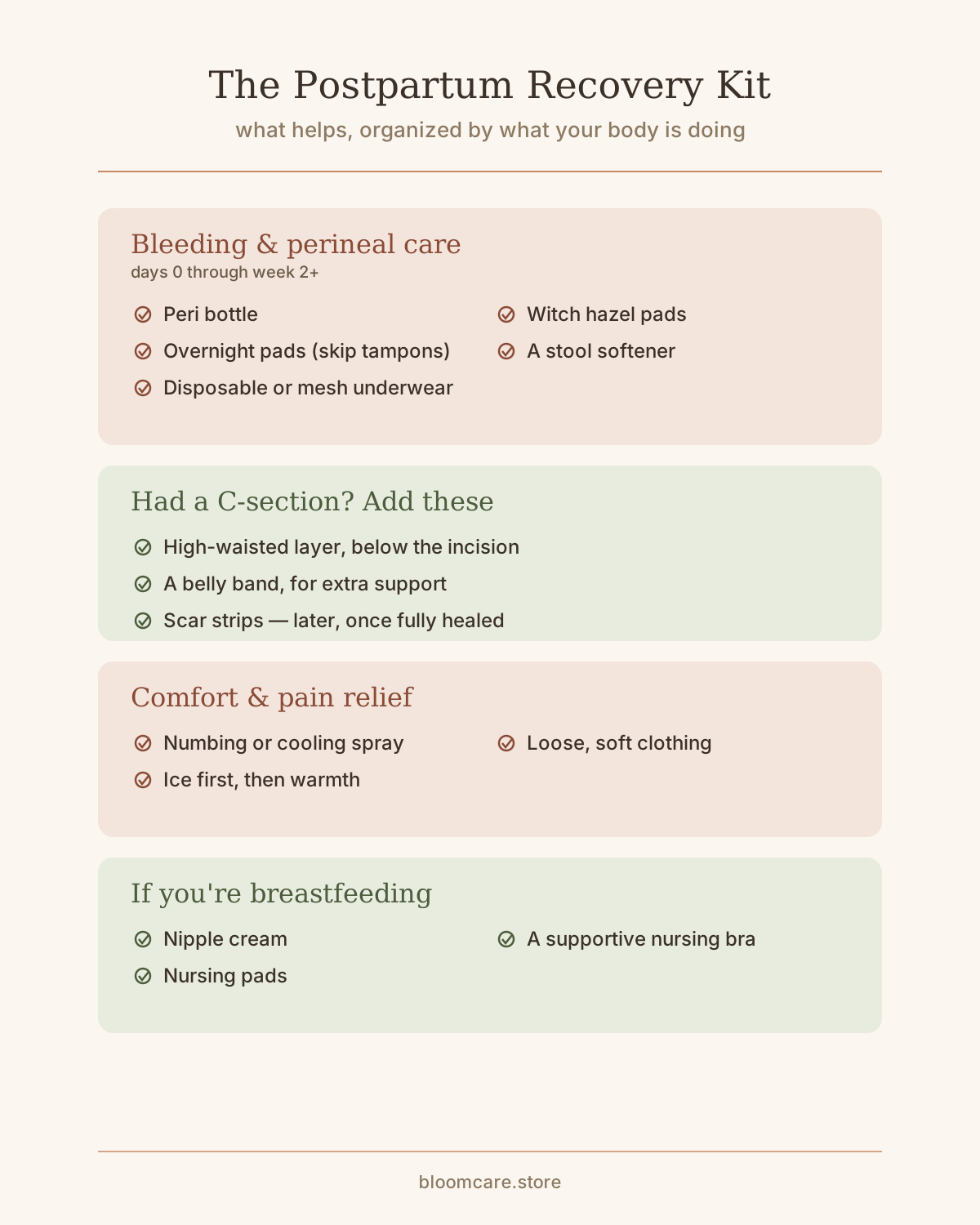
The postpartum recovery kit checklist
Quick reference before the "why": organized by what's happening in your body, not by aisle.
For bleeding and perineal healing (day 0 through week 2+)
- A peri bottle for rinsing after the bathroom
- Overnight pads (skip tampons and menstrual cups entirely)
- Disposable or mesh underwear for the first week
- Witch hazel pads for cooling relief
- A stool softener, so you're not straining
If you had a C-section, add these
- A soft, high-waisted layer that doesn't press on the incision
- A belly band, if you want extra support standing and walking
- Silicone scar strips (later, and only once the incision has fully healed)
For comfort and pain
- A numbing or cooling spray for the perineal area
- Ice packs for the first 24 hours, then switching to warmth
- Loose, soft clothing you don't mind subjecting to laundry abuse
If you're breastfeeding
- Nipple cream
- Nursing pads
- A supportive, easy-access nursing or pumping bra
For sleep and the rest of the fourth trimester
- Extra pillows for positioning while feeding or resting
- A water bottle and snack station within arm's reach
- Realistic expectations: a lot of this stage is about healing, not shopping
That's the shape of it. Below is the "why" for each one, the honest trade-offs, and what to actually look for if you're buying rather than borrowing.
How we researched this
We don't accept sponsorships, and nobody pays for a spot on this list. For every product below, we read the pattern across thousands of Amazon reviews (including the one- and two-star ones, which is usually where the truth lives) and checked every claim against what recovering mamas actually report. Facts about each product come from its own listing; the verdicts come from that review pattern.
you don't have to earn this kind of comfort
A quick, honest note: if you buy through links in this journal, BloomCare may earn a small commission, at no extra cost to you. Nobody pays for a place on our lists, and our research is done before we ever look at a link.
Bleeding and perineal care: the first two weeks
Whether you deliver vaginally or by C-section, you'll bleed for a while. ACOG's postpartum guidance covers what's typical and what isn't, and our postpartum bleeding week by week guide maps it out in full. The supply list itself is short, and it's the one place we'd tell you not to cut corners.
Peri bottle. After a vaginal birth especially, wiping is the enemy of a healing perineum. MedlinePlus recommends spraying warm water over the area after using the bathroom, then patting (never rubbing) dry.
What it is: an angled bottle designed to be used upside down, so the spray reaches without contorting or putting a hand near the toilet. What the reviews say: across roughly 29,000 ratings, the pattern is consistent: the upside-down angle is what people recovering from tears, stitches, or a C-section say made bathroom trips manageable on no sleep. The recurring complaint is that the included travel bag isn't waterproof, so pack it dry. Worth it if: you had stitches, a tear, or a C-section, or you just want the version of this chore that asks the least of you. Skip it if: you're fine with the hospital's upright freebie and don't mind the awkward angle. Our full peri bottle comparison covers every style side by side.
See the Frida Mom upside-down peri bottle
Disposable underwear. MedlinePlus's aftercare guidance recommends changing pads every 2 to 4 hours in the early days, which is a lot easier with underwear built to hold a full-size pad in place rather than fighting your regular underwear to do the job.
What it is: an 8-pack of seamless, disposable, high-waisted boyshorts designed for extra stretch and light abdominal support. What the reviews say: the recurring theme is that these feel more secure than hospital mesh underwear, especially for holding oversized pads or ice packs in place. Durability is a genuinely mixed pattern: most reviewers say they hold up fine for a day, but a repeating minority report tearing. Worth it if: you want more support than mesh and don't want to launder anything in your first exhausted week. Skip it if: you have very reactive skin, or the free hospital mesh already does the job. Our full underwear comparison walks through disposable versus mesh versus pads directly.
See the Frida Mom disposable postpartum underwear
Witch hazel pads. These are a genuinely optional comfort layer, not a medical requirement, but the review pattern behind them is strong.
What it is: pre-moistened pads with witch hazel as the active ingredient, meant to cool and soothe irritated perineal or rectal tissue, and to double as a folded compress. What the reviews say: across roughly 61,800 ratings, the dominant theme is fast, gentle cooling relief, with several reviewers keeping the tub in the refrigerator for extra soothing. The main complaint is that pads can bunch up inside underwear rather than lying flat. Worth it if: you want cooling relief for perineal soreness or hemorrhoids beyond what a peri bottle alone gives you. Skip it if: your provider has told you to avoid witch hazel for a specific reason, or plain water is already enough for you.
See TUCKS medicated cooling pads with witch hazel
Stool softener. Straining on the toilet is genuinely worth avoiding while you're healing from stitches, a tear, or hemorrhoids. As one OB-GYN put it to Cleveland Clinic, hospitals "almost universally give people a stool softener when they leave the hospital, as a just-in-case measure," alongside options like witch hazel pads for hemorrhoid comfort. We won't recommend a specific product or dose here: ask your provider or hospital nurse what they'd suggest, since this is exactly the kind of decision that belongs with them.
If you had a C-section, add these
A C-section is major abdominal surgery layered on top of everything a vaginal birth also involves, and it earns its own supply additions and its own complete recovery kit checklist. Our C-section recovery timeline walks through what to expect week by week, with citations throughout. This page just covers the "what to add to your cart" version.
The short list: soft, high-waisted underwear or a belly band that sits below the incision line instead of pressing on it, and loose clothing that doesn't need reaching or twisting to put on. Silicone scar strips come later, only once the incision is fully healed, never before, and always worth confirming timing with your provider.
ACOG's postpartum pain guidance also covers incision-specific pain management directly. It's worth reading before you assume over-the-counter pain relief is your only option.
Comfort and pain relief
Some of this section is about what genuinely reduces pain; some of it is about feeling less like you're improvising.
Numbing or cooling spray. A witch hazel pad handles cooling; a numbing spray is a step up for active soreness.
What it is: an aerosol spray with a topical numbing ingredient, designed for no-touch application to sensitive or hard-to-reach areas. What the reviews say: honestly, mixed depth. The manufacturer states many new moms first use this exact spray in the hospital, and that hospitals trust it for postpartum comfort, but the review base on this specific listing is thin and mostly about general cuts and burns rather than postpartum use specifically. We're telling you that plainly rather than dressing up thin evidence as more than it is. Worth it if: you want a hospital-familiar option and don't need deep review evidence to trust a brand you may already know. Skip it if: you'd rather choose based on a large body of postpartum-specific reviews: the witch hazel pads above have far more of that evidence for the exact same job.
See the Dermoplast pain relief spray
Ice, then heat. MedlinePlus recommends ice packs in the first 24 hours to reduce swelling, then a warm sitz bath after that. We don't feature a specific ice pack or sitz bath product on this page. Our sitz bath guide covers exactly how and when, including what (if anything) is worth adding to the water.
Clothing. Nothing fancy: soft, loose, and easy to get on one-handed while you're also holding a baby. This is one of the few genuinely "any brand works" categories on this entire list.
If you're breastfeeding
Skip this section if you're not: nothing here is a requirement, and formula-feeding families need none of it. Our breastfeeding and pumping essentials checklist is the deeper hub for this whole category.
The CDC notes that mild nipple soreness is common in the first one to two weeks as you and your baby adjust, and that engorgement in the early days is normal too. Persistent pain, or pain that doesn't improve after those first couple of weeks, is a sign to call a lactation consultant rather than push through. That's not something a cream should have to fix.
Nipple cream.
What it is: a single-ingredient, ultra-purified lanolin balm, safe to leave on during a feed with no need to wipe off first. What the reviews say: across roughly 54,000 ratings, the consistent praise is real, fast relief for sore or cracked nipples. The recurring split is texture preference: some love the thick, protective feel, others find it heavier than they'd like. Worth it if: you want the most reviewed, most doctor-recommended option and don't have a lanolin sensitivity. Skip it if: you have a wool allergy or prefer a vegan formula: our lanolin versus lanolin-free comparison covers the alternatives directly.
See the Lansinoh lanolin nipple cream
Nursing pads.
What it is: individually wrapped disposable pads with a contoured shape and adhesive strips to stay in place inside a bra. What the reviews say: across roughly 52,600 ratings, the dominant theme is strong absorbency through full feeding sessions and overnight wear. The adhesive is a genuinely mixed pattern: most reviewers say it holds, a repeating minority say it doesn't stick well. Worth it if: you want a disposable option you don't have to think about laundering. Skip it if: you're home most of the day and would rather wash a small reusable set: our disposable versus reusable comparison breaks down the real cost and comfort trade-offs.
See the Lansinoh disposable nursing pads
Sleep, hydration, and the rest of the fourth trimester
A lot of what you'll deal with in these weeks (hair loss, night sweats, swelling, the sheer exhaustion) isn't solved by a product at all. It's just what a body does while it heals, and the fourth trimester is real covers the full picture system by system.
What actually helps in the meantime is boring and unglamorous: extra pillows within reach for whatever position you're feeding or resting in, water and a snack somewhere you don't have to stand up to get, and as much help from the people around you as you're willing to accept. These are the after birth essentials nobody puts on a registry, and they matter more than most of what is.
Packing ahead: hospital bag and gifts
If you're reading this before birth, most of what's above doesn't need to come with you to the hospital: hospitals routinely send new parents home with a basic peri bottle, mesh underwear, ice packs, and pads already. Our hospital bag guide covers exactly what's worth packing versus what you'll be handed anyway, so you're not duplicating what's already free, which is really the point of a postpartum recovery kit checklist done well.
The "postpartum must-haves" lists get this wrong
Most of those lists are really just long: more items doesn't mean more helpful, and a few popular ones are barely used by the people who bought them. That's the entire premise behind our postpartum products you can skip guide: an honest look at what recovering mamas actually reach for versus what sits in a drawer.
If the goal is a postpartum recovery kit checklist that respects your budget as much as your recovery, start smaller than you think you need to. Our postpartum essentials on a budget guide covers the minimum version of this exact list: what to prioritize if you're buying five things instead of fifteen.
Questions mamas actually ask
What do I need for postpartum recovery?
At minimum: a way to clean and cool a healing perineum (peri bottle, pads, witch hazel), comfortable underwear, and a plan for pain relief you've discussed with your provider. That's the core of any postpartum recovery kit checklist: everything past it, like nipple cream, a belly band, or specific loungewear, depends on how you deliver and whether you're breastfeeding.
Do I need to buy all of this before I give birth?
No. Hospitals typically send new parents home with a basic peri bottle, ice packs, mesh underwear, and pads already, so a lot of this checklist is about upgrades and gaps rather than starting from zero. Our hospital bag guide breaks down what's actually provided versus what's worth packing.
How many postpartum pads do I actually need?
Plan for more than you think, especially in the first week. MedlinePlus recommends changing pads every 2 to 4 hours in the early days, and our postpartum bleeding week by week guide maps out how the flow and pad needs typically change over time.
Is my postpartum kit different if I have a C-section?
Yes, in a few specific ways: underwear and belly support that don't press on the incision, and a delayed start on anything (like scar strips) that needs fully healed skin. Our C-section recovery kit is the dedicated version of this checklist for that recovery.
When should I call my doctor instead of just pushing through?
Always, if something feels seriously wrong to you, but specifically, the CDC's urgent maternal warning signs include soaking through a pad in an hour, passing a clot larger than an egg, a fever of 100.4°F or higher, severe swelling in your hands or face, and severe belly pain that doesn't ease up. None of those are a wait-and-see situation.
Keep reading
- The fourth trimester is real: what actually happens to your body after birth: the full system-by-system picture this checklist is built on
- Postpartum bleeding, week by week: what's typical and what you'll need: the cited deep dive behind the bleeding and pad guidance above
- C-section recovery, week by week: what to expect and what helps: if a C-section is part of your recovery, start here
Last reviewed: July 13, 2026 by the BloomCare Editorial Team. We re-review guides every 90 days.
Sources
continue reading
you might also like