Your C-Section Recovery Kit: The Complete Checklist
The 'c-section must haves' lists skip the honest part. Our research-backed C-section recovery kit checklist covers what helps, what's optional, what to skip.

Quick summary
The 'c-section must haves' lists skip the honest part. Our research-backed C-section recovery kit checklist covers what helps, what's optional, what to skip.
Key takeaway
Take it one day at a time. You're doing better than you think.
The spirit
“It gets better, promise.”
BloomCare Editorial
Trusted pregnancy and postpartum educators
Nobody hands you a c-section recovery kit on your way out of the hospital, just a discharge folder and instructions to "take it easy" while you're also caring for a newborn. So you end up piecing one together from a dozen conflicting lists, most of which were written for recovery in general and mention your incision as an afterthought.
A C-section is major abdominal surgery. ACOG notes that it now accounts for roughly a third of U.S. births (32.4% in the most recent CDC data) and yet most "postpartum essentials" content treats it as a footnote to vaginal birth instead of its own recovery with its own supply list.
This is our research-backed C-section recovery kit checklist, organized around what your incision and your core actually need at each stage, not around what's trending on someone else's registry.
BloomCare shares product research and education, not medical advice. Every recovery is different, and your provider knows yours best. For anything that worries you, that's always the right call.
Think of this page as the dedicated version of our postpartum recovery kit checklist. Everything that guide covers still applies to you, plus the C-section-specific additions below. If you're recovering from a vaginal birth instead, our complete perineal care guide is the better starting point.
Whether you call it a c-section care kit checklist or a recovery basket, the list underneath is the same. Here's ours.
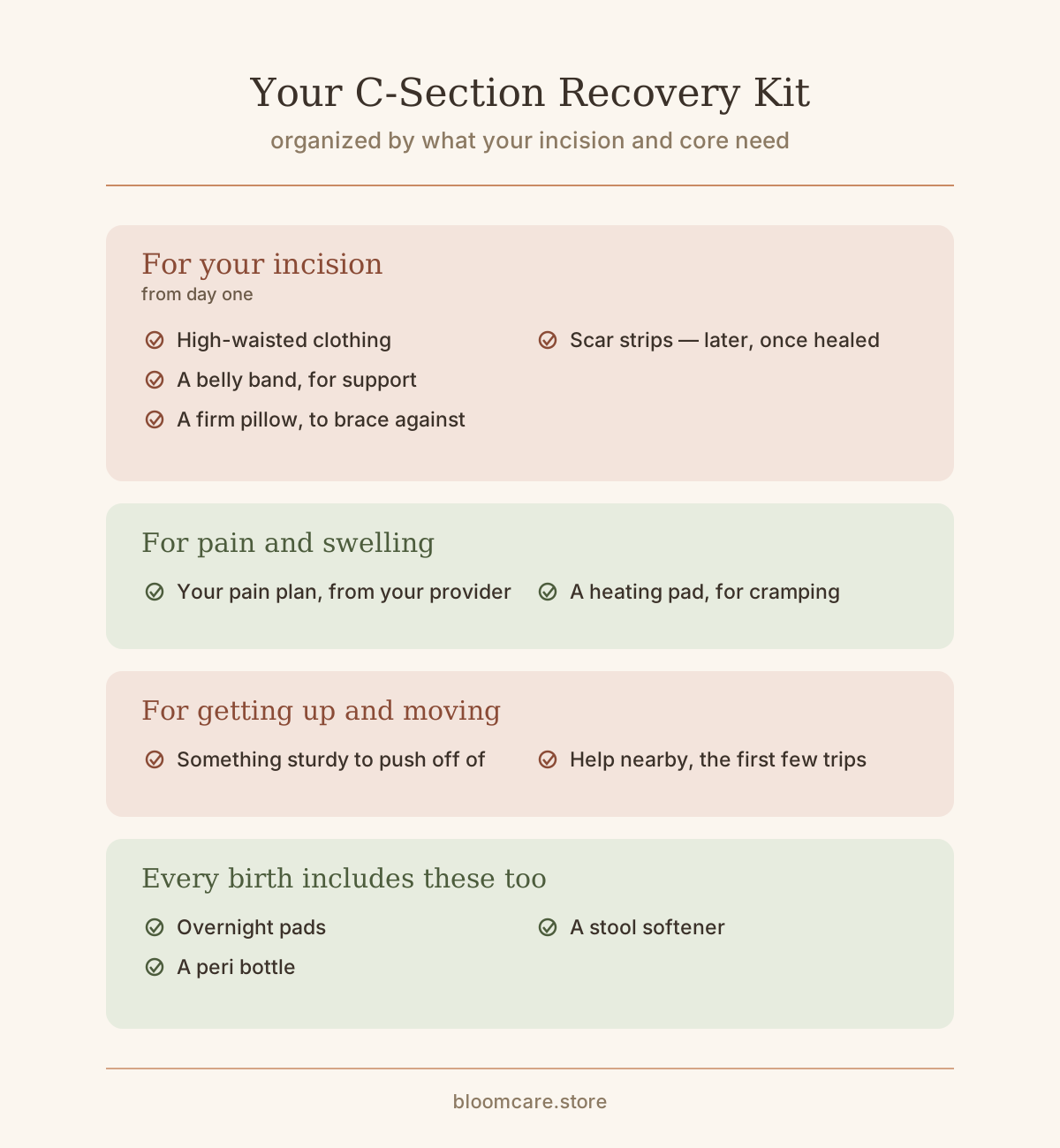
The C-section recovery kit checklist
Quick reference before the "why": organized by what your body is actually doing, not by what's trending.
For your incision (from day one)
- Loose, high-waisted clothing that doesn't sit on or rub the incision line
- A belly band or abdominal binder, if you want extra support standing and walking
- A firm pillow to brace against your abdomen when you cough, laugh, or get out of bed
- Silicone scar strips (later, and only once the incision has fully closed)
For pain and swelling
- Whatever pain management plan you've worked out with your provider
- A heating pad for cramping
- Ice or a cold pack for the first day or two, if your provider recommends it
For getting up and moving
- A step stool or something sturdy to push off of near the bed
- Help nearby for the first several trips out of bed
- Realistic expectations about how slow "getting up" will feel at first
Everything a vaginal birth also involves
- Overnight pads for postpartum bleeding, which happens regardless of delivery method
- A peri bottle, since sitting on the toilet is still uncomfortable post-surgery
- A stool softener, so you're not straining against a fresh incision
For the hospital bag, if you're reading this beforehand
- Loose robes or nightgowns that don't need to clear your hips to put on
- Slip-on slippers, since bending to tie shoes is off the table for a while
- Whatever's already on your general hospital bag list, plus the above
That's the shape of it. Below is the "why" for each one, the honest trade-offs, and what to actually look for if you're buying rather than borrowing.
How we researched this
We don't accept sponsorships, and nobody pays for a spot on this list. For every product below, we read the pattern across thousands of Amazon reviews (including the one- and two-star ones, which is usually where the honest complaints live) and checked every claim against what recovering mamas actually report. Facts about each product come from its own listing; the verdicts come from that review pattern.
healing from surgery while keeping a tiny human alive is not a small thing
A quick, honest note: if you buy through links in this journal, BloomCare may earn a small commission, at no extra cost to you. Nobody pays for a place on our lists, and our research is done before we ever look at a link.
Incision care and scar support
ACOG explains that it takes a few weeks for the abdomen to heal after a cesarean, and that some pain or numbness around the incision during that time is typical. Our C-section recovery timeline maps the full week-by-week picture; this section covers what's actually worth having on hand.
Belly band or abdominal binder. Cleveland Clinic is direct about what this does and doesn't do: a belly band can help hold your midsection in and support your lower back, but wearing one "can't heal diastasis recti and won't strengthen your core muscles." Its real job is comfort and a posture reminder, not a shortcut back to anything.
What it is: a 9-inch adjustable compression wrap with three individually tightening straps, designed for support after either vaginal or C-section delivery. What the reviews say: across roughly 4,570 ratings, the recurring theme is genuine support standing, sitting up, and moving around post-delivery, with several reviewers calling it a real upgrade over the free hospital binder. The honest complaints repeat too: it tends to roll or ride up during the day, and the velcro closure loses its grip well before the rest of the binder wears out. Worth it if: you want extra support and a physical reminder to engage your core as you heal. Skip it if: you're already comfortable with the binder your hospital sends home, or abdominal compression bothers you while sitting for long stretches. Several reviewers flagged that specifically.
See the Frida Mom belly binder
Silicone scar strips. Once your incision has fully closed (never before, and always worth confirming timing with your provider), Cleveland Clinic notes that a silicone gel sheet is one of the treatments providers may recommend to help a scar look smaller or less noticeable over time.
What it is: 8-inch, reusable medical-grade silicone patches sized to cover a full incision in one piece, with a storage case for patches between uses. What the reviews say: across roughly 2,480 ratings, reviewers consistently describe real improvement in how the scar looks and feels over weeks of use, and like that one patch covers a typical incision without piecing together shorter strips. The recurring complaint is adhesion: most say it holds through a shower, but a repeating minority say it doesn't stick well or irritates skin at the edges. Worth it if: your incision has fully healed and you want a reusable option that covers the whole line in one piece. Skip it if: your incision isn't healed yet (this is a healed-skin product only) or you'd rather cut a roll of tape to your exact length for less per inch. Our silicone scar sheets guide walks through timing and alternatives in more depth.
See the Frida Mom C-section silicone strips
Core support and getting your body moving again
Getting out of bed is its own skill for the first week or two. Cleveland Clinic's guidance on protecting a healing core is simple and applies well beyond diastasis recti: roll onto your side first, then use your arms to push yourself up, rather than sitting straight up from your back, and avoid lifting anything heavier than your baby in the early weeks.
High-waisted underwear built around the incision. The functional difference from ordinary postpartum underwear is the waistband: where it sits relative to your incision line matters more than the fabric.
What it is: high-waisted postpartum underwear with two compression zones (firmer support at the core, lighter compression over the lower incision area) with a hook-and-eye closure meant to be fastened before you step in. What the reviews say: across roughly 461 ratings, reviewers consistently describe real midsection support and specifically credit the lower panel with keeping clothing and waistbands off a healing incision. Fit is a genuinely mixed pattern (the torso panel runs short for some frames and snug at the hip for others), and a repeating complaint involves the closures or internal boning wearing out with regular use. Worth it if: you want a waistband engineered to sit below the incision line rather than on it. Skip it if: your disposable postpartum underwear already clears the incision fine, or your torso runs long, several reviewers found the panel came up short there. Our belly band buying guide covers sizing and duration in more detail.
See the Belly Bandit C-section recovery underwear
A note on timing: there's no single tier-1 answer for exactly how many weeks to wear either the binder or the incision-friendly underwear: it depends on your healing and your comfort. Use them as long as they help, taper off as you don't need them, and ask your provider if anything about your recovery feels off-track.
Comfort, pain relief, and rest
ACOG's postpartum pain guidance covers your real options here, from prescribed medication to a heating pad for cramping, worth reading in full before you assume over-the-counter relief is your only tool.
Incision support pillow. Coughing, laughing, sneezing, and even standing up all put direct pressure on a fresh incision, and having something firm to brace against (sometimes called "splinting") genuinely helps.
What it is: a contoured abdominal support pillow with two adjustable straps for hands-free wear, a pocket for a hot or cold gel pack, and a second pocket sized for a phone. What the reviews say: across roughly 1,258 ratings, the dominant theme is real relief bracing the incision during coughing, laughing, and getting in and out of bed, plus repeated use as a buffer against the seatbelt on the ride home. Most of the visible reviews come from hysterectomy and general abdominal-surgery patients rather than C-section moms specifically, but the underlying need (something firm to hug against a healing incision) is identical. The recurring complaint is that the single included gel pack cools or warms quickly. Worth it if: you want a hands-free way to protect your incision during car rides, coughing fits, or the first few times you stand up. Skip it if: you already have a firm throw pillow you don't mind dedicating to the job: the core function doesn't require a purpose-built product, just something you'll actually keep within reach.
See the MOYOAMA abdominal support pillow
ACOG also notes that a hospital stay after a cesarean is usually 2 to 4 days, and that you'll likely need help from a nurse or partner for the first few times you get out of bed, plan for that help to continue for a while once you're home, too.
Everything a vaginal birth also involves
A C-section doesn't exempt you from the parts of recovery every birth shares. ACOG confirms you can expect bleeding or discharge for about 4 to 6 weeks regardless of delivery method, plus mild cramping, especially while breastfeeding. Our postpartum bleeding week by week guide maps out how that typically changes over time, and a peri bottle still earns its place in your bathroom; our full peri bottle comparison covers which style to reach for.
Recovering from a vaginal birth instead? Start with our guide to perineal healing after birth: it covers the routine a C-section skips.
A stool softener is also worth asking your hospital or provider about before you leave: straining against a fresh abdominal incision is exactly the kind of strain worth avoiding, and this is a decision that belongs with them, not a product recommendation from us.
Where the "c-section must-haves" lists get it wrong
Most of those lists are just long. More items on a registry doesn't mean more helpful, and a few popular ones sit in a drawer unopened. Our postpartum products you can skip guide is the honest, dedicated look at what recovering mamas actually reach for versus what doesn't earn its keep. Several entries on that list are C-section-specific additions reviewers themselves say they didn't need.
If the goal is a c-section recovery essentials list you'll actually use, start with what's above and add from there, not the other way around.
you get to decide what actually belongs in your kit
If you're building this before birth, remember hospitals routinely send new parents home with a basic binder, mesh underwear, ice packs, and pads already: a lot of what's above is about upgrades and gaps, not starting from zero.
Packing ahead: your hospital bag
If your C-section is scheduled, most of this recovery kit doesn't need to travel with you in your hospital bag: hospitals provide the immediate basics. Our hospital bag for mom guide covers what's actually worth packing versus what you'll be handed anyway, with a section specifically for planned-C-section additions like a robe that clears your hips and slip-on shoes.
If you're also breastfeeding, our breastfeeding and pumping essentials checklist is the deeper hub for that gear; nothing about a C-section changes what's on it.
Questions mamas actually ask
What do I actually need to buy for c-section recovery?
At minimum: loose high-waisted clothing that clears the incision, a pain management plan you've discussed with your provider, and something firm to brace against when you cough or stand. A belly band, incision-friendly underwear, and silicone scar strips are genuinely helpful additions, but they're upgrades on top of that core, not requirements.
How long do I need to wear a belly band after a C-section?
There's no single universal number: it depends on your healing, your comfort, and what your provider says at your follow-up visits. Cleveland Clinic is clear that a binder supports and reminds rather than heals, so wear it as long as it helps you feel supported and stop when it doesn't.
When can I start using silicone scar strips?
Only once your incision has fully closed, with no scabbing or open areas, never on a healing wound. Confirm the exact timing with your provider at your follow-up visit, since healing pace varies. Our guide to choosing and timing silicone scar sheets covers this in more depth.
Is a c-section recovery kit worth buying, or should I just build my own?
Either works. Pre-made kits save you the research time but bundle in items you may not need; building your own from this checklist lets you skip what doesn't apply to you and spend on what does. The honest answer is that the products matter more than the packaging they come in.
When should I call my doctor instead of just pushing through?
ACOG is specific here: call your ob-gyn right away if you have a fever, chills, leg pain, draining or leakage from your incision, heavy bleeding, worsening pain, or shortness of breath. None of those are a wait-and-see situation.
Keep reading
- The postpartum recovery kit checklist: what helps, what's optional, what to skip: the full-recovery version this page builds on
- Perineal care after birth: a gentle, complete guide to healing: if a vaginal birth is part of your recovery too, or you want the shared basics
- Hospital bag for mom: what you'll actually use: for packing ahead of a scheduled C-section
Last reviewed: July 14, 2026 by the BloomCare Editorial Team. We re-review guides every 90 days.
Sources
continue reading
you might also like