Postpartum Bleeding, Week by Week: What's Typical and What You'll Need
A cited, week-by-week guide to postpartum bleeding: what's typical at each stage, what's not, what pads you'll actually need, and when to call your provider.

Quick summary
A cited, week-by-week guide to postpartum bleeding: what's typical at each stage, what's not, what pads you'll actually need, and when to call your provider.
Key takeaway
Take it one day at a time. You're doing better than you think.
The spirit
“It gets better, promise.”
BloomCare Editorial
Trusted pregnancy and postpartum educators
Nobody mentions how long postpartum bleeding actually sticks around, or how much it changes week to week. You leave the hospital with a stack of pads and a vague "it'll taper off," and then day ten arrives with a surprise gush of red that makes you wonder if something's wrong.
This is our cited, postpartum bleeding week by week breakdown: what's typical at each stage, what tends to catch people off guard (the day 7 to 14 comeback is real, and usually harmless), and what pads you'll actually need at each point. It's the companion piece to our complete perineal care recovery guide, which covers the rest of vaginal birth recovery.
The bleeding itself has a name, lochia, and a predictable shape even though the exact timing varies from person to person. It's also a completely different process from your period returning (more on that distinction below). Here's what the research says, stage by stage.
BloomCare shares product research and education, not medical advice. Every recovery is different, and your provider knows yours best. For anything that worries you, that's always the right call.
How long does postpartum bleeding last?
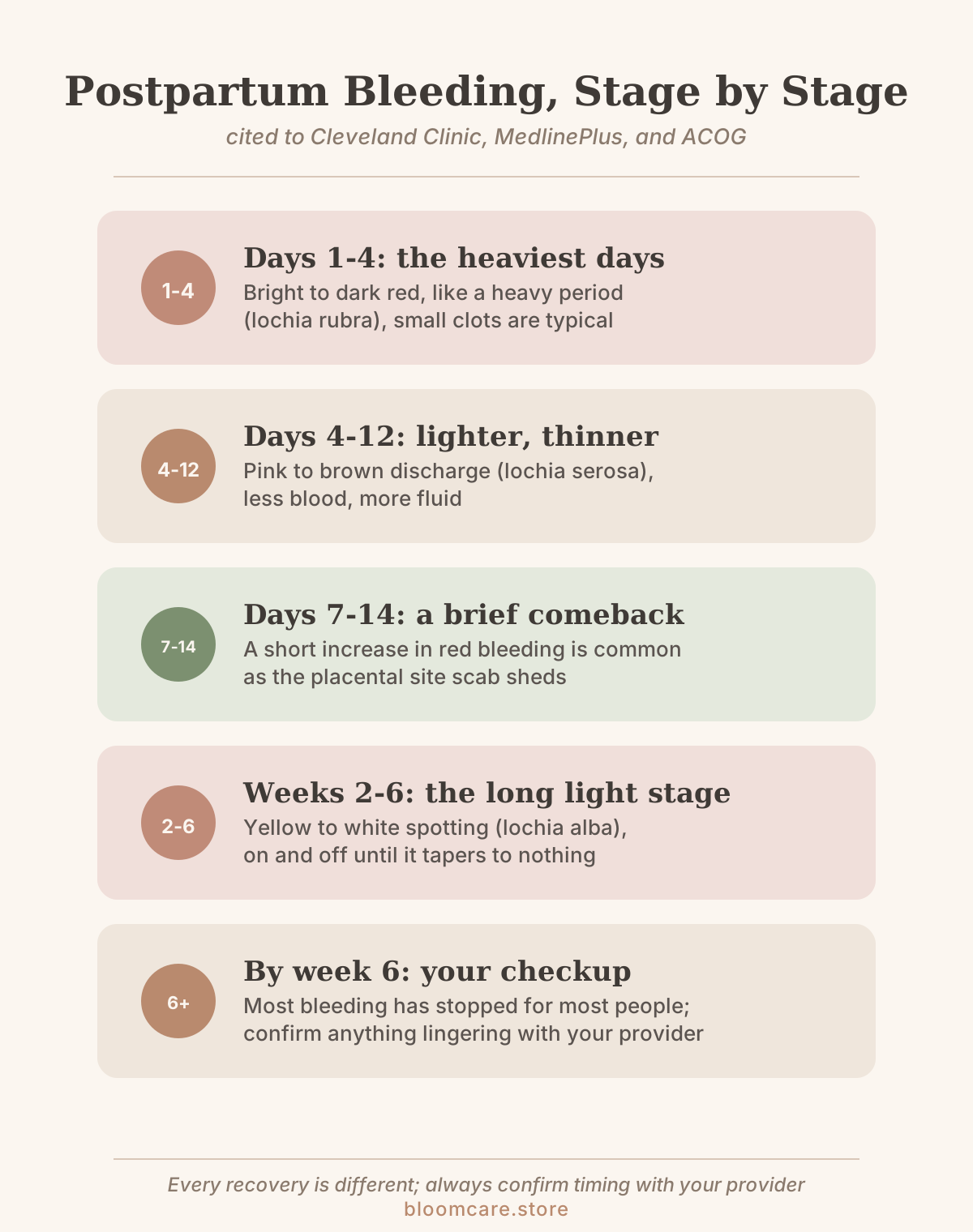
Postpartum bleeding, called lochia, typically lasts four to six weeks. It moves through three stages: heavy red bleeding for the first few days, lighter pink or brown discharge through about day twelve, then light yellow-white spotting until it tapers off completely, according to Cleveland Clinic and MedlinePlus.
this part doesn't come with a registry, but it deserves one
Postpartum bleeding week by week: the lochia stages explained
Days 1-4: the heaviest days (lochia rubra)
Cleveland Clinic describes this first stage, lochia rubra, as bright to dark red, heavy like a menstrual period, and lasting at least three to four days. Small clots, no bigger than a quarter, are typical here, and so is mild cramping as your uterus works to shrink back down. MedlinePlus notes you may also pass small clots the first few times you get up, and that bleeding tends to decrease the most during this first week.
Days 4-12: lighter, but don't put the pads away (lochia serosa)
The color shifts from red to pink or brown, and the flow itself thins out, Cleveland Clinic explains, with fewer clots (or none) by this stage. This stage is called lochia serosa, and it runs roughly from day four through day twelve.
Days 7-14: the comeback nobody warns you about
Here's the part that trips people up. MedlinePlus is direct about this: "it is not uncommon to have an increase in red bleeding around 7 to 14 days," when the scab covering the spot where your placenta attached starts to shed. It can look alarming after several days of lighter flow, but on its own, for a day or so, it's a known and expected part of the timeline, not a setback.
Weeks 2-6: the long, light stage (lochia alba)
By around day twelve, discharge usually turns yellowish-white and much lighter, Cleveland Clinic notes, sometimes just spotting that starts and stops over several days. This final stage, lochia alba, is when most people finish out their bleeding, with both Cleveland Clinic and MedlinePlus putting the full timeline at up to six weeks.
By week 6: your checkup, not a hard deadline
Somewhere between four and six weeks is when MedlinePlus recommends a postpartum checkup, and for most people, bleeding has fully stopped by then. That visit is also where a lot of other loose ends get tied up: how your uterus is healing, how you're feeling emotionally, and when it's reasonable to resume normal activity. If you're still seeing regular bleeding well past that point, mention it there rather than quietly waiting it out.
Call your provider if…
Most of this timeline is unremarkable in the best way: heavy, then lighter, then gone. But some signs mean call your provider right away, not wait and see.
ACOG is specific that postpartum hemorrhage, bleeding that's much heavier than usual, means soaking through two pads an hour for more than an hour or two, and it can happen anytime from the first 24 hours up to 12 weeks after delivery. CDC's Hear Her campaign puts the everyday threshold even lower: soaking through one or more pads in an hour, or passing clots bigger than an egg, are both urgent warning signs on their own.
Call your provider if you notice:
- Soaking through one or more pads an hour, or two pads an hour for more than an hour or two
- Clots bigger than an egg or a golf ball
- Bleeding that's still as heavy as a period after more than four days (aside from the expected days 7 to 14 comeback)
- Bleeding or spotting that stops, then returns after several days
- Discharge with a foul odor, or that turns greenish
- Fever, chills, feeling faint, dizziness, or a racing heart
- Pain, swelling, or warmth in one leg
- Increasing pain in your belly or pelvis
MedlinePlus lists nearly identical thresholds for exactly this reason: this isn't one source's opinion, it's the shared standard. Call your provider first. If you can't reach them, or you feel like you need care right away, ACOG's guidance is clear: go to the emergency room or call 911. None of this is yours to diagnose alone.
What pads you'll need for postpartum bleeding, stage by stage
The gear doesn't change the timeline, but buying the right thing at the right stage saves you money and laundry.
Days 1-4: this is the heaviest stretch, and MedlinePlus recommends changing pads every two to four hours. Many hospitals send you home in thick mesh underwear, which works fine for a day or two but isn't built for daily wear once you're home. Our postpartum underwear guide compares disposable underwear, mesh, and traditional pads so you can decide what's actually worth buying for this stretch. You'll also be rinsing rather than wiping after the bathroom for a while; MedlinePlus specifically recommends spraying warm water over the area and patting dry instead of using toilet paper, and our peri bottle comparison covers which style makes that easiest.
Days 4-12: as flow lightens and turns pink or brown, most people step down from the longest overnight styles to standard overnight pads or regular maxi pads. Keep a few of the heavier ones on hand for the days 7-to-14 comeback described above, since it tends to show up right when you've started buying lighter supplies.
Weeks 2-6: thin liners are usually enough for the lochia alba stage. It's worth not overbuying a giant stash of heavy-duty pads meant to last the full six weeks, since the amount you actually need drops fast after the first week or two, and a half-used box of overnight pads is a strange thing to have leftover.
Tampons and menstrual cups: hold off. MedlinePlus is explicit that you should wait six weeks, until your provider confirms you're healed at your postpartum checkup, before using tampons.
you know your own body better than any timeline does
Questions mamas actually ask
When does lochia stop?
For most people, lochia stops somewhere in the four-to-six-week range, per Cleveland Clinic and MedlinePlus, tapering through the three stages above rather than ending abruptly. If it's still going strong well past six weeks, mention it at your checkup rather than assuming it'll sort itself out.
Is it normal for bleeding to get heavier again around day 10?
Yes, within reason. MedlinePlus notes that an increase in red bleeding around 7 to 14 days is common, tied to the scab from your placental site shedding. A short bump back toward red, for a day or so, isn't the same as bleeding that's heavy for four-plus days straight, which is one of the signs worth calling your provider about.
What's the difference between lochia and a period?
Lochia is your body clearing the extra blood, tissue, and mucus left over from where the placenta was attached, not a menstrual cycle starting back up. Your actual period returns separately and later: MedlinePlus puts that at four to nine weeks after delivery if you're not breastfeeding, and anywhere from three to twelve months if you are.
How many pads will I need for postpartum bleeding?
There's no single tier-1 number, since flow and duration vary by person, but the stage-by-stage supply breakdown above mirrors how MedlinePlus frames it: changing every two to four hours in the heaviest days, then stepping down as bleeding lightens. Plan for more in the first week than you think you'll need.
Can I use tampons or a menstrual cup for postpartum bleeding?
Not right away. MedlinePlus recommends waiting a full six weeks, until your provider confirms healing at your postpartum visit, before using tampons. Pads are the standard recommendation until you're cleared.
Keep reading
- Vaginal birth recovery: the complete perineal care guide: the full picture this timeline is part of
- Disposable underwear, pads, or mesh? What to actually wear after birth: matched to the stages above
- Peri bottles, compared: upside-down vs. hospital-style: for the rinse-not-wipe routine in the first stretch
Last reviewed: July 15, 2026 by the BloomCare Editorial Team. We re-review guides every 90 days.
Sources
continue reading
you might also like