Sitz Baths After Birth: How, How Often, and What (If Anything) to Add
How soon to start a sitz bath after birth, how long and how often to soak, and what the evidence says about adding Epsom salt or herbs to the water.
Quick summary
How soon to start a sitz bath after birth, how long and how often to soak, and what the evidence says about adding Epsom salt or herbs to the water.
Key takeaway
Take it one day at a time. You're doing better than you think.
The spirit
“It gets better, promise.”
BloomCare Editorial
Trusted pregnancy and postpartum educators
Somewhere in your discharge instructions, someone probably mentioned a sitz bath, then moved on before explaining what it actually is, how warm the water should be, or how many times a day you're supposed to sit in it. Taking a sitz bath postpartum is one of the simplest, most evidence-backed comfort measures out there: warm water, a shallow soak, and real relief for a body that's doing a lot of healing at once.
This guide is part of our complete guide to perineal care after birth, where the full healing routine lives. Here, we're covering just the sitz bath: when to start, how often, and what (if anything) is actually worth adding to the water.
Search around and you'll find everything from plain warm water to elaborate herbal blends, most of it unsourced. We went looking for what cited guidance actually says, since that turns out to matter more than what sells well.
BloomCare shares product research and education, not medical advice. Every recovery is different, and your provider knows yours best. For anything that worries you, that's always the right call.
What You'll Need for a Sitz Bath Postpartum
Technically? Just warm water and something to sit in. MedlinePlus recommends using sitz baths a few times a day after a vaginal birth, and notes you can do this in a regular bathtub with a few inches of water, or with a basin made to fit over your toilet rim so you're not waiting on a full tub every time.
A quick, honest note: if you buy through links in this journal, BloomCare may earn a small commission, at no extra cost to you. Nobody pays for a place on our lists, and our research is done before we ever look at a link.
If refilling a bathtub several times a day sounds like a lot right now, a toilet-seat sitz bath basin is the practical shortcut: it fills in seconds and drains straight into the toilet when you're done.
What it is: a foldable basin that fits over most standard toilet shapes, made from BPA-free, temperature-resistant plastic and silicone, with built-in drain holes. What the reviews say: across roughly 5,580 ratings, mamas recovering from vaginal births, C-sections, and hemorrhoids consistently describe it as soothing and easy to clean, with the fold-flat design making storage simple between uses. The recurring complaint is fit: a minority say it didn't sit right on their particular toilet despite the universal-fit claim. Worth it if: you want a faster routine than refilling a bathtub several times a day. Skip it if: your toilet is an unusual shape, or you're happy with a regular bathtub and a few inches of warm water: the healing comes from the water, not the container.
See the Fivona sitz bath basin
How to Use a Sitz Bath After Birth: 8 Simple Steps
Here's how to use a sitz bath safely, step by step:
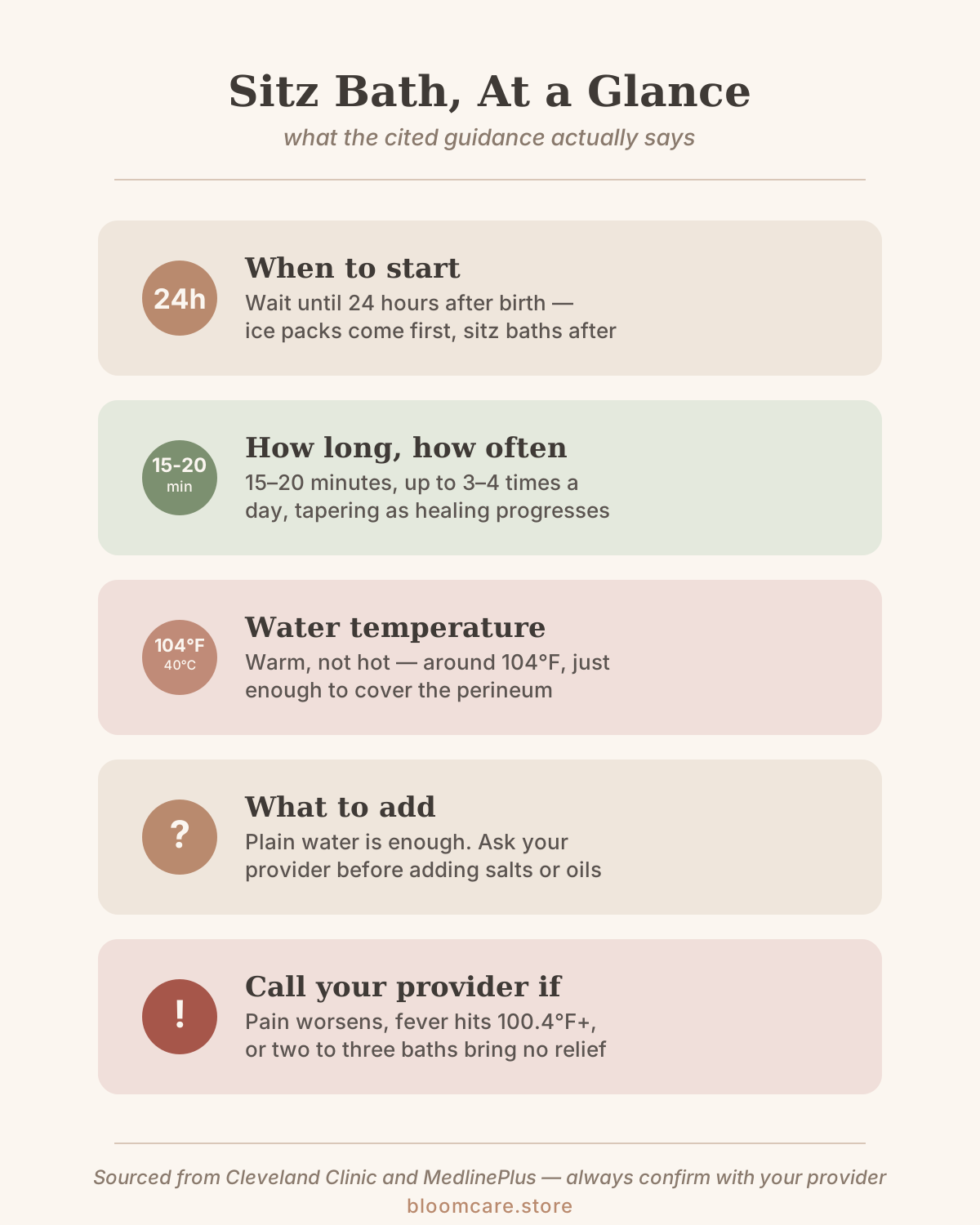
- Wait until 24 hours after birth. MedlinePlus advises using ice packs in the first 24 hours instead, then switching to warm soaks.
- Fill your basin or tub with 3 to 4 inches of warm water, enough to cover your perineum, per Cleveland Clinic.
- Check the temperature on your wrist first. Aim for warm, around 104°F (40°C): soothing, never hot enough to sting.
- Skip the extras unless your provider has cleared them. Plain water does the job on its own.
- Sit for 15 to 20 minutes, adding warm water as it cools if you're staying in longer.
- Pat the area dry when you're done; don't rub.
- Clean the basin or tub with soap and water after every use.
- Repeat 2 to 4 times a day for the first week or two, then taper off as healing progresses.
this is one of the few parts of recovery that's allowed to just feel good
How Often Should You Take a Sitz Bath After Birth?
Once you're past the first 24 hours, frequency is flexible and mostly about what feels good. Cleveland Clinic notes that providers commonly recommend three to four sitz baths a day for pain and itching relief, each lasting 15 to 20 minutes. MedlinePlus's guidance is simpler still: a few times a day, for as long as it helps.
There's no fixed finish line. Most mamas use sitz baths most heavily in the first one to two weeks, while soreness and swelling are at their peak, then taper naturally as healing progresses over the following weeks. If you're not seeing any improvement after two or three sitz baths, Cleveland Clinic recommends checking in with your provider rather than just adding more soaks.
Do You Need Epsom Salt in Your Sitz Bath?
This is where most of the internet disagrees with the cited guidance, and it's worth knowing before you buy anything. Plenty of products marketed for postpartum sitz baths lead with Epsom salt, herbs, or essential oils as the whole point. Cleveland Clinic is direct about this: plain warm water alone works, and salts, oils, and other additives can actually cause irritation; they should only go in the water if your provider specifically tells you to add them.
That doesn't mean every additive product is a scam; some mamas and providers do use them, and the products themselves aren't unsafe when used as directed. It just means the warm water is doing the medical work, not the salt, so if budget is tight this month, the plain-water routine covers the same need.
Sitz Bath vs. Padsicles: Do You Need Both?
Short answer: they're not competing for the same job, and most recovery routines use both at different points. MedlinePlus's guidance puts ice (including padsicles) first, in the initial 24 hours after birth, to bring down swelling. Warm sitz baths pick up after that 24-hour mark, once the goal shifts from reducing swelling to easing soreness and supporting healing.
If you haven't made a batch yet, our step-by-step padsicles guide covers exactly what goes in them and when to prep them (ideally before you give birth). Once you're a few days in, plenty of mamas keep both in rotation: padsicles for a quick between-bathroom cooldown, sitz baths for the slower, sit-down soak.
Call Your Provider If…
Most of what a sitz bath treats is completely normal healing. But a few signs point to something a soak won't fix, and Cleveland Clinic, MedlinePlus, and the CDC's urgent maternal warning signs all point to the same short list. Call your provider if you notice:
- Pain that's getting worse instead of better, or a perineum that looks red and puffy
- No improvement after two or three sitz baths
- No bowel movement for four or more days
- Blood clots larger than an egg, or bleeding heavy enough to soak a pad in an hour
- Discharge with a bad odor, or a wound that reopens
- A fever of 100.4°F or higher
None of those are a wait-and-see situation.
Questions Mamas Actually Ask
How soon after birth can I take a sitz bath?
Wait 24 hours. MedlinePlus recommends ice packs for swelling in that first day instead, then switching to warm sitz baths once the 24-hour mark has passed.
How long should a sitz bath last?
Cleveland Clinic recommends soaking for 15 to 20 minutes, with warm water around 104°F, enough to feel soothing, never hot enough to sting.
Do I need a special basin, or can I use my bathtub?
Either works. A regular bathtub with a few inches of warm water covers the same medical need as a toilet-seat basin: the basin is just a faster routine if you don't want to refill a tub several times a day.
Is it safe to add Epsom salt or herbs?
Cleveland Clinic's guidance is that plain water works and additives may cause irritation, so only add them if your provider has specifically told you to.
Keep reading
- Start here: Perineal care after birth: a gentle, complete guide to healing: the full routine this soak belongs to
- Peri bottles, compared: upside-down vs. hospital-style: the other half of your bathroom routine
- Disposable underwear, pads, or mesh? What to actually wear after birth: what holds everything in place between soaks
Last reviewed: July 14, 2026 by the BloomCare Editorial Team. We re-review guides every 90 days.
Sources
continue reading
you might also like