Breastfeeding & Pumping Essentials: What You Need, What Can Wait
A breastfeeding essentials checklist rarely says what can wait. Our research-backed guide covers what actually helps with nursing and pumping, and what to skip.

Quick summary
A breastfeeding essentials checklist rarely says what can wait. Our research-backed guide covers what actually helps with nursing and pumping, and what to skip.
Key takeaway
Take it one day at a time. You're doing better than you think.
The spirit
“It gets better, promise.”
BloomCare Editorial
Trusted pregnancy and postpartum educators
Every breastfeeding essentials checklist you find before birth reads like a packing list for a trip you've never taken. Most of them are actually a nursing supplies list dressed up as an emergency: everything sounds urgent, nothing tells you what's optional, and half of it assumes you already know whether you're pumping.
This is the feeding half of our postpartum recovery kit checklist, pulled out and gone deep, because nursing and pumping gear is its own category with its own learning curve. Whether you call it a breastfeeding starter kit or just "the pump bag," the goal here is the same: what actually helps, sorted by what you're actually doing, and what can wait until you know more.
Feeding is also where a lot of postpartum products end up with a permanent shelf in the closet. So alongside every pick, we're telling you honestly what to skip for now, because a shorter list you'll actually use beats a longer one you won't.
BloomCare shares product research and education, not medical advice. Every recovery is different, and your provider knows yours best. For anything that worries you, that's always the right call.
If you want the wider picture of what's happening to your body right now, the fourth trimester is real and covers it system by system. This page just covers the feeding gear.
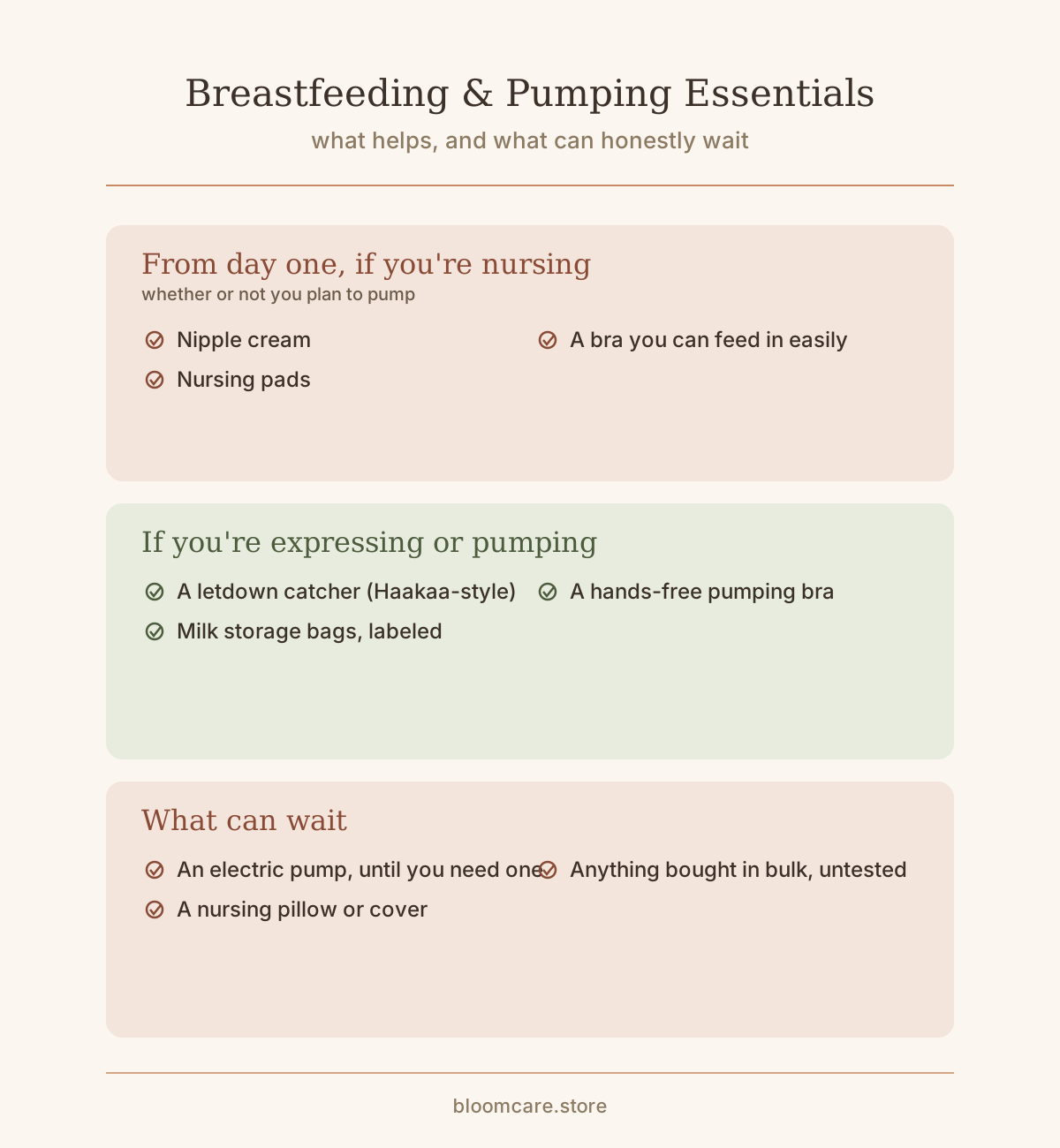
The breastfeeding essentials checklist
Quick reference before the "why": sorted by what you're actually doing, not by what's trending.
From day one, if you're nursing at all
- Nipple cream for the soreness that's common in the first couple of weeks
- Nursing pads for the days your supply and your baby's schedule don't quite match
- A bra you can actually feed in without wrestling it off
If you're expressing or pumping any amount
- A letdown catcher or manual pump (Haakaa-style) to save what would otherwise soak into a pad
- Breast milk storage bags, labeled with the date
- A hands-free pumping bra, if you'll be pumping more than occasionally
What can wait
- An electric pump, if you're not pumping on a regular schedule yet
- A nursing pillow, cover, or specialty bottles bought before you know what you'll actually reach for
- Buying anything in bulk before you've tried a single one
That's the shape of it. Below is the "why" for each pick, the honest trade-offs, and what the reviews actually say once you've used something for more than a week.
How we researched this
We don't accept sponsorships, and nobody pays for a spot on this list. For every product below, we read the pattern across thousands of Amazon reviews (including the one and two star ones, which is usually where the honest complaints live) and checked every claim against what nursing and pumping mamas actually report. Facts about each product come from its own listing; the verdicts come from that review pattern.
this part gets easier with practice, we promise
A quick, honest note: if you buy through links in this journal, BloomCare may earn a small commission, at no extra cost to you. Nobody pays for a place on our lists, and our research is done before we ever look at a link.
For sore, sensitive nipples
Nipple cream is usually the first thing on any breastfeeding essentials checklist, and for good reason. The CDC notes that sore or sensitive nipples are common in the first few weeks as you and your baby adjust to latching, and that pain which doesn't improve after one to two weeks is a sign to talk to a lactation consultant or your provider rather than push through it. A cream helps with the first kind of soreness. It isn't meant to fix the second.
Nipple cream.
What it is: a single-ingredient, ultra-purified lanolin balm, safe to leave on during a feed with no need to wipe off first. What the reviews say: across roughly 54,000 ratings, the consistent praise is fast, real relief for sore or cracked nipples. The recurring split is texture preference: some love the thick, protective feel, others find it heavier than they'd like. Worth it if: you want the most reviewed, most doctor-recommended lanolin option and don't have a lanolin sensitivity. Skip it if: you have a wool allergy or prefer a vegan formula. Our lanolin versus lanolin-free comparison covers the alternatives directly, and if pain is the real problem rather than simple soreness, La Leche League notes that persistent or worsening pain is worth a lactation consultant's attention, not a different cream.
See the Lansinoh lanolin nipple cream
For leaking between feeds
Nursing pads.
What it is: individually wrapped disposable pads with a contoured shape and adhesive strips to hold them in place inside a bra. What the reviews say: across roughly 52,600 ratings, the dominant theme is strong absorbency through full feeding sessions and overnight wear. The adhesive is a genuinely mixed pattern: most reviewers say it holds, a repeating minority say it doesn't stick well. Worth it if: you want a disposable option you don't have to think about laundering, especially in the first weeks. Skip it if: you're home most of the day and would rather wash a small reusable set. Our disposable versus reusable nursing pads comparison breaks down the real cost and comfort trade-offs.
See the Lansinoh disposable nursing pads
For catching letdown and building a stash
The pumping essentials below matter most once you're expressing regularly, whether that's away from the baby, back at work, or just building a freezer stash. One of the more oddly beloved items on any nursing supplies list is a small silicone pump that does almost nothing on its own. It suctions to your other breast while you nurse and simply catches what would otherwise soak into a pad, which for a lot of mamas adds up to a real freezer stash without a single extra pumping session.
Manual pump or letdown catcher (Haakaa-style).
What it is: a one-piece silicone suction pump with no motor or batteries, worn on the opposite breast during a feed or used actively as a manual pump. What the reviews say: across roughly 95,800 ratings, the dominant theme is catching letdown milk that would otherwise be lost, with reviewers describing real freezer stashes built up without extra pumping time. Suction comfort is a genuinely mixed pattern: gentle for many, uncomfortable at first for others, and this version has no suction base, so a filled pump can tip and spill if you set it down. Worth it if: you're nursing and want to catch what you're already losing without adding a pumping session to your day. Skip it if: you've tried manual suction before and found it uncomfortable, or you know you'll want to set it down mid-session rather than hold or wear it.
See the haakaa manual breast pump
How much it catches varies a lot from feed to feed and mama to mama: some collect a few drops, others fill it well past halfway on a strong letdown. Reviewers who use it consistently, on the opposite side at every feed, tend to report the biggest stash over time. It also takes a few tries to get the seal right, so don't judge it by the first attempt.
Storing what you pump
However you're collecting milk, storing it safely matters more than the bag it comes in. The CDC recommends keeping freshly expressed breast milk at room temperature (77°F or colder) for up to 4 hours, in the refrigerator for up to 4 days, and in the freezer for about 6 months for best quality, with up to 12 months acceptable. The CDC also directs storing milk in dedicated breast milk storage bags or clean, food-grade containers, never in disposable bottle liners or bags not meant for milk storage, and keeping it out of the refrigerator or freezer door, where temperature swings most.
Breast milk storage bags.
What it is: pre-sterilized, double-zip-sealed storage bags designed to freeze flat rather than stand upright, with space to write the date, name, and amount. What the reviews say: across roughly 94,600 ratings, reviewers who switched from another brand consistently cite the double-zip seal and the flat-freeze design, which several say lets them stack far more milk in the same freezer space. A repeating minority report bags ripping after freezing or leaking when overfilled. Worth it if: you want a bag that stacks flat and seals twice, and you're comfortable pumping into a bottle and pouring rather than pumping straight into the bag. Skip it if: you pump directly into bags with a different pump brand and don't want a separate adapter.
See the Lansinoh breastmilk storage bags
Thawing matters just as much as freezing. The CDC recommends thawing a bag in the refrigerator overnight, or under warm or lukewarm running water, and never in a microwave, which can create hot spots and destroy nutrients. Once milk is thawed in the refrigerator, use it within 24 hours, counting from when it's fully thawed rather than from when it left the freezer. Once it's warmed or brought to room temperature, use it within 2 hours, and never refreeze milk that's already been thawed. Thawing the oldest bag first keeps a growing stash from turning into a guessing game.
Keeping pump parts clean
Whatever you're using to express milk, from a letdown catcher to a full electric pump, the parts that touch it need regular cleaning. The CDC recommends cleaning pump parts as soon as possible after each use, either by hand in a wash basin used only for infant feeding equipment (not directly in the sink, where drain germs can linger) or in a dishwasher on a hot-water, heated-drying cycle. Sanitizing once a day, on top of regular cleaning, matters most if your baby is younger than 2 months, was born early, or has a weakened immune system. Everything should air-dry fully before it goes back together, since damp parts invite mold.
This isn't a product decision so much as a habit worth building early. A second set of pump parts means you're not scrubbing between every session, whatever else on this list does or doesn't make it into your bag.
Hands-free pumping
Not everyone pumps regularly, and if you don't, this section (and the bra below) can wait. If you do, a hands-free setup is the difference between a pumping session and twenty minutes of your day you can't use for anything else.
Pumping bra.
What it is: a strapless, Velcro-adjustable layer that wraps over your existing nursing or maternity bra to hold pump flanges in place, rather than replacing your everyday bra. What the reviews say: across roughly 20,459 ratings, the dominant theme is genuine hands-free convenience across a very wide range of body sizes, thanks to the adjustable back panel. The honest limits: it's built for the pumping session itself, not all-day wear, and it takes a session or two to center the flange openings correctly. Worth it if: you're pumping often enough that holding flanges in place with your hands is genuinely eating into your day. Skip it if: you're mostly nursing directly and only pumping occasionally. A camisole with the front pulled aside covers occasional use just fine.
See the Simple Wishes hands-free pumping bra
What can wait
A full electric pump setup is a genuine need for plenty of families, especially anyone returning to a job with a set schedule. But if you're not pumping on a regular schedule yet, a full electric pump is one of the easiest items on any breastfeeding essentials checklist to buy too early, when a manual letdown catcher already covers the occasional session. Many insurance plans cover a pump, so it's worth checking your benefits before buying one yourself.
The same goes for a nursing pillow, a nursing cover, or a drawer of specialty bottles: useful for some families, unused by others, and hard to know which you'll be until you're a few weeks in. The pattern across new-parent communities we read as part of our research repeats often: the items people actually reach for tend to be simpler and smaller in scope than the items on the glossiest registries.
If there's one rule worth following before you buy anything else, it's this: try one of something before you buy a case of it. Nipple cream, storage bags, and nursing pads all have close competitors, and what works for one mama's skin or supply doesn't always work for the next.
Questions mamas actually ask
What do I need for breastfeeding?
At minimum: nipple cream, nursing pads, and a bra you can feed in without a struggle. That's the core of any breastfeeding essentials checklist. Everything past it, like a letdown catcher, storage bags, or a hands-free pumping bra, depends on whether and how often you're expressing milk rather than feeding directly.
Do I need a breast pump right away?
Not necessarily. If you're nursing directly and not returning to work or school soon, a pump can wait until you actually need one. The CDC notes that early breastfeeding is largely about you and your baby adjusting to each other, and many insurance plans cover a pump when the time comes.
How long can I store breast milk?
The CDC recommends up to 4 hours at room temperature, up to 4 days in the refrigerator, and about 6 months in the freezer for best quality, with up to 12 months acceptable. Always label bags with the date and use the oldest milk first.
When should sore nipples worry me?
Mild soreness in the first one to two weeks is common as you and your baby adjust. La Leche League notes that pain which persists or worsens past that point is worth a lactation consultant's help rather than a stronger cream, since it's often a latch or positioning issue a cream can't fix.
What's the difference between a nursing bra and a pumping bra?
A nursing bra has drop-down cups for feeding your baby directly and is meant for all-day wear. A pumping bra holds pump flanges in place hands-free and is built for the length of a pumping session, not a full day. Many mamas own one of each.
Keep reading
- The fourth trimester is real: what actually happens to your body after birth: the full system-by-system picture this checklist fits inside
- The postpartum recovery kit checklist: the complete version of this list across every part of recovery, not just feeding
- Disposable versus reusable nursing pads: which actually keeps you dry?: the deeper comparison behind the nursing pad pick above
Last reviewed: July 14, 2026 by the BloomCare Editorial Team. We re-review guides every 90 days.
Sources
continue reading
you might also like