The Fourth Trimester Is Real: What Actually Happens to Your Body After Birth
The fourth trimester is real: a cited, system-by-system guide to what actually happens to your body after birth, and exactly what genuinely helps.
Quick summary
The fourth trimester is real: a cited, system-by-system guide to what actually happens to your body after birth, and exactly what genuinely helps.
Key takeaway
Take it one day at a time. You're doing better than you think.
The spirit
“It gets better, promise.”
BloomCare Editorial
Trusted pregnancy and postpartum educators
If "fourth trimester what to expect" is what brought you here, you're not alone. Most pregnancy content stops at delivery, right at the point where your own recovery is just getting started.
The fourth trimester is a real, defined stretch of healing, not just a phrase. Cleveland Clinic describes it as the period that begins the moment you give birth and generally runs six to eight weeks, though plenty of what's actually happening to your body (hormones, hair, healing tissue) keeps unfolding well past that window.
This is our research-backed, system-by-system guide to postpartum body changes: what's genuinely typical, what tends to help, and when something is a call-your-provider moment instead of a wait-and-see one. It's the companion piece to our postpartum recovery kit checklist, which covers the supplies for each stage below; this page covers what those supplies are actually responding to.
BloomCare shares product research and education, not medical advice. Every recovery is different, and your provider knows yours best. For anything that worries you, that's always the right call.
What is the fourth trimester?
The fourth trimester is the roughly 12-week stretch after birth when your body physically recovers from pregnancy and delivery: your uterus shrinks back down, hormones swing sharply, bleeding gradually tapers off, and new patterns around sleep, mood, and feeding take shape. Cleveland Clinic frames the core of it as six to eight weeks, with real change continuing beyond that.
The fourth trimester for mom deserves the same planning energy that goes into the nursery, not just a footnote to the baby's first weeks. The rest of this guide walks through what's actually going on, body system by body system.
Postpartum body changes, system by system
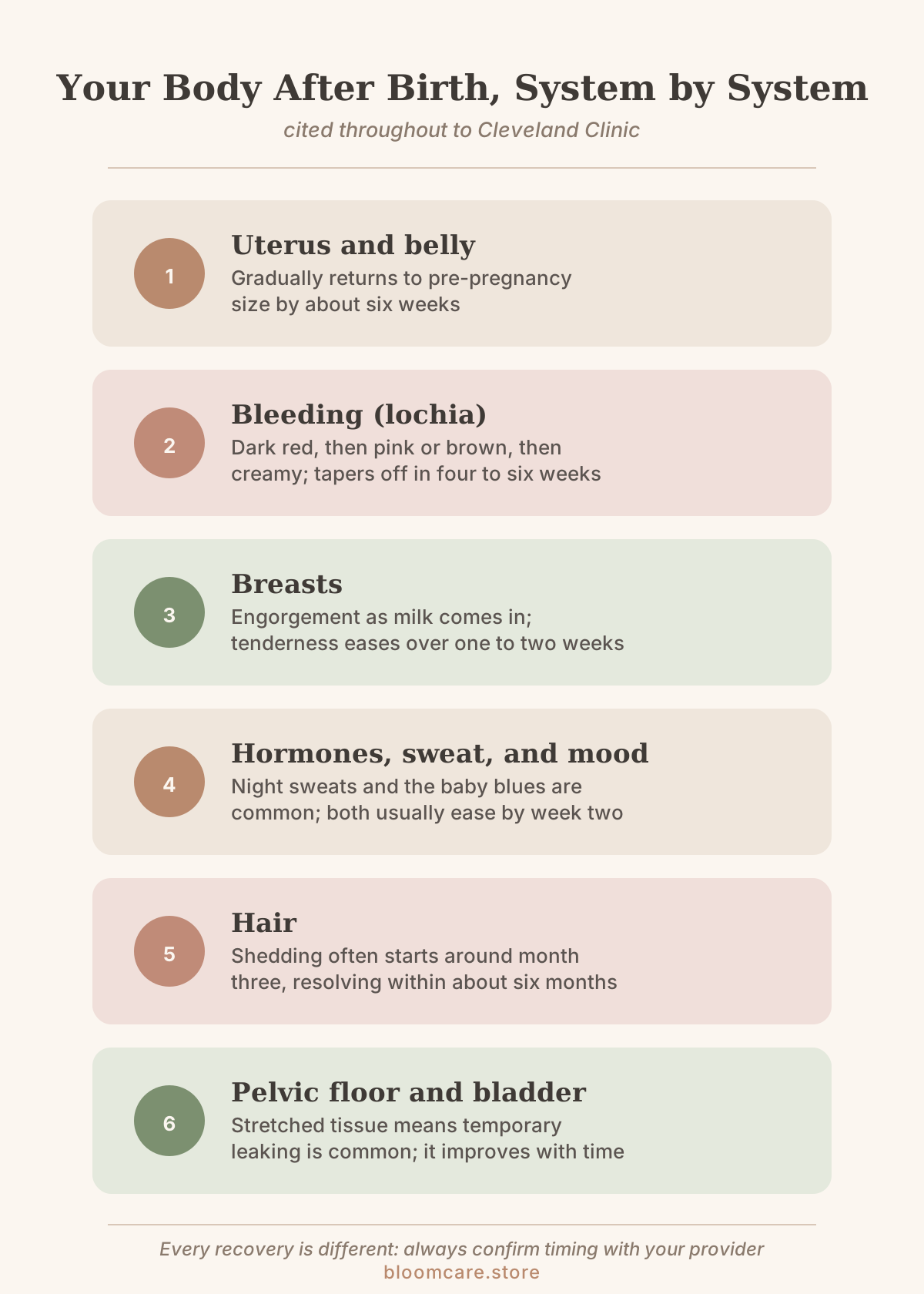
Here's what's typically happening, and roughly when, cited throughout to Cleveland Clinic.
Your uterus and belly
Right after birth, the top of your uterus sits at about the level of your navel, then gradually descends day by day until it's back to its pre-pregnancy, pear-sized shape at around six weeks. Along the way, you'll likely notice after-pains, cramping from the same contractions that are helping control bleeding, usually lasting about five minutes at a time and easing as the days pass.
Your belly itself will look and feel different for a while: softer and rounder than you might expect right after delivery. That's healing tissue and stretched muscle finding their way back, not a problem to fix on any particular timeline. Cleveland Clinic notes most people also lose another 10 to 20 pounds of fluid weight in the days after birth, on top of what's lost at delivery itself.
Bleeding: understanding lochia
Everyone bleeds after birth, whether delivery was vaginal or by C-section. This discharge, called lochia, follows a fairly predictable color pattern: dark red for the first few days (small clots are normal in this window), shifting to pinkish or brownish through about day 10, then creamy or yellowish by around day 14. Bleeding generally stops within four to six weeks.
That timeline, and exactly what you'll want on hand at each stage, gets its own dedicated page: our postpartum bleeding week by week guide maps the whole arc plus the specific point where heavy bleeding stops being normal.
Your breasts
As your milk comes in, expect warmth, hardness, and a heavy, full feeling in your breasts, engorgement, alongside tenderness that's genuinely common in the first couple of weeks. If you're not breastfeeding, that leaking and fullness typically resolves within one to two weeks on its own.
If you are breastfeeding or pumping, the supply side of this system (nursing bras, pads, nipple care) is its own deep topic. Our breastfeeding and pumping essentials checklist is the dedicated hub for that whole category.
Hormones, sweat, and mood
Estrogen and progesterone drop sharply right after delivery, and that shift shows up in several places at once: increased sweating, especially at night, is one of the more startling and least-discussed symptoms. Our postpartum night sweats guide goes deep on that specific pattern: why it happens and what actually helps.
The same hormone shift drives the "baby blues": 70% to 80% of women report feelings of sadness or sudden tearfulness after delivery, and it's genuinely common rather than a sign anything's wrong. Baby blues typically peak in the first week and resolve within about two weeks, driven by a mix of hormones, exhaustion, and the sheer size of the adjustment.
Postpartum depression is a different, more serious pattern: it affects roughly 1 in 7 women, can start within the first week or show up later in the year, and involves persistent sadness, hopelessness, or loss of interest that interferes with daily life rather than easing after two weeks. If symptoms are getting worse instead of better, or you have any thoughts of harming yourself or your baby, that's an immediate call to your provider or the 988 Suicide & Crisis Lifeline, not something to sit with alone.
this stretch asks a lot of you, and struggling through it doesn't mean you're doing it wrong
Hair
Around three months postpartum, many people notice a sudden increase in shedding: more than the usual 100 or so hairs a day, sometimes dramatically more. It's driven by the same estrogen drop as everything else on this list, and it typically resolves within six months, with fullness generally returning by your baby's first birthday. Shedding that continues past six months is worth mentioning to your provider, since it can point to something separate like iron or thyroid levels.
Pelvic floor and bladder
Vaginal delivery stretches the tissue that normally supports bladder and bowel control, which is why temporary leaking or loss of control is common in the early weeks, for both urine and, less often, stool. The full healing routine (rinsing, cold-then-warm care, and when this stops being "temporary") lives in our perineal care after birth guide.
Recovering from a C-section instead? The incision and core are healing on a different timeline: start with our C-section recovery timeline, week by week.
Energy and healing
Blood loss, broken sleep, and full-body healing are all drawing on your energy at the same time, so real fatigue in these weeks isn't a character flaw, it's arithmetic. Cleveland Clinic's postpartum guidance is blunt about the fix being unglamorous: rest when you can, let your body take the time it needs, and let food and help from others carry some of the load.
Call your provider if…
Most of what's above is normal-healing territory. Cleveland Clinic is specific that some symptoms mean call your provider right away, not wait and see:
- Bleeding heavy enough to soak a pad in under an hour, or passing a clot larger than a golf ball
- Pain or cramping that's severe, steady, or getting worse instead of better
- A severe headache, especially with blurred vision or light sensitivity
- Fever, or foul-smelling discharge from an incision or tear
- Burning or sharp pressure when urinating
- Leg pain, redness, swelling, or warmth
- Chest pain or shortness of breath
- Breasts that are painful, hot to the touch, or streaked with red
- Sadness that isn't lifting, or any thoughts of hurting yourself or your baby
None of these are yours to diagnose alone, and calling is always the right call, even if it turns out to be nothing.
What helps, system by system
The gear doesn't rewrite this timeline, but the right support at the right stage makes it more livable. A few of our dedicated guides map directly onto the systems above:
For bleeding and the early days, our postpartum bleeding week by week guide maps supplies to each stage. For the pelvic floor and perineal healing, our perineal care after birth guide covers the full routine.
If a C-section is part of your recovery, our C-section recovery timeline walks through what helps at each week. If you're breastfeeding or pumping, our breastfeeding and pumping essentials checklist covers that entire category.
For the broadest view of what to have on hand across every system at once, our postpartum recovery kit checklist is the hub all of these guides connect back to.
you don't have to have opinions about any of this yet; you just have to get through today
Questions mamas actually ask
What is the fourth trimester?
It's the roughly 12-week period after birth when your body recovers from pregnancy and delivery: your uterus returns to size, hormones shift sharply, bleeding tapers off, and your breasts, hair, and energy all go through their own changes on their own timelines.
How long does the fourth trimester last?
Cleveland Clinic puts the core recovery window at six to eight weeks, but that's not the whole story: hair shedding often doesn't start until month three, and full hormone rebalancing can take longer still. Think of six to eight weeks as the first chapter, not the end of the book.
What are the most common postpartum body changes?
The ones nearly everyone experiences are uterine cramping and shrinking, several weeks of tapering bleeding, breast changes as milk comes in, a sharp hormone drop that can bring night sweats and the baby blues, and (a few months later) noticeable hair shedding. Which of these feel intense varies a lot person to person.
Is it normal to still feel "off" at six weeks?
Often, yes. Your six-week checkup is a genuine assessment point, not a finish line: some healing (deeper core strength, full hormone rebalancing, hair regrowth) is still underway well past that visit, and that's expected rather than a sign something went wrong.
When should I call my doctor during the fourth trimester?
Cleveland Clinic is specific about calling right away for heavy bleeding, severe or worsening pain, a severe headache or vision changes, fever, leg swelling, chest pain or shortness of breath, breast infection signs, or persistent sadness that isn't lifting. When in doubt, call anyway.
Keep reading
- The postpartum recovery kit checklist: what helps, what's optional, what to skip: the supply side of every system covered above
- Perineal care after birth: a gentle, complete guide to healing: the full routine for vaginal birth recovery
- C-section recovery, week by week: what to expect and what helps: the dedicated timeline if a C-section is part of your story
Last reviewed: July 15, 2026 by the BloomCare Editorial Team. We re-review guides every 90 days.
Sources
- Cleveland Clinic: Postpartum: Stages, Symptoms & Recovery Time
- Cleveland Clinic: Pregnancy: Physical Changes After Delivery
- Cleveland Clinic: What's Normal (and Not) After You Give Birth
- Cleveland Clinic: Baby Blues vs. Postpartum Depression
- Cleveland Clinic: Postpartum Depression (PPD)
- Cleveland Clinic: Postpartum Hair Loss
continue reading
you might also like