Postpartum Night Sweats: Why You Wake Up Drenched, and What Helps
Why postpartum night sweats happen, how long they typically last, and the cited, honest bedding and sleepwear fixes that actually help you sleep.
Quick summary
Why postpartum night sweats happen, how long they typically last, and the cited, honest bedding and sleepwear fixes that actually help you sleep.
Key takeaway
Take it one day at a time. You're doing better than you think.
The spirit
“It gets better, promise.”
BloomCare Editorial
Trusted pregnancy and postpartum educators
Nobody puts "waking up drenched at 3 a.m." on any pregnancy checklist, so the first time it happens, it can feel like something's wrong. It usually isn't.
Postpartum night sweats are one of those fourth-trimester surprises that rarely comes up before it happens to you. This is our research-backed look at why they happen, how long they typically stick around, and the honest, cited bedding and sleepwear fixes that actually help, alongside the one symptom pairing that does warrant a call to your provider. It's part of our fourth trimester guide, which covers the fuller picture of what your body goes through after birth.
If you're also dealing with the "is this normal" spiral at 3 a.m., you're in exactly the right place. This is a very common, very undiscussed piece of recovery, not a sign that something's off.
BloomCare shares product research and education, not medical advice. Every recovery is different, and your provider knows yours best. For anything that worries you, that's always the right call.
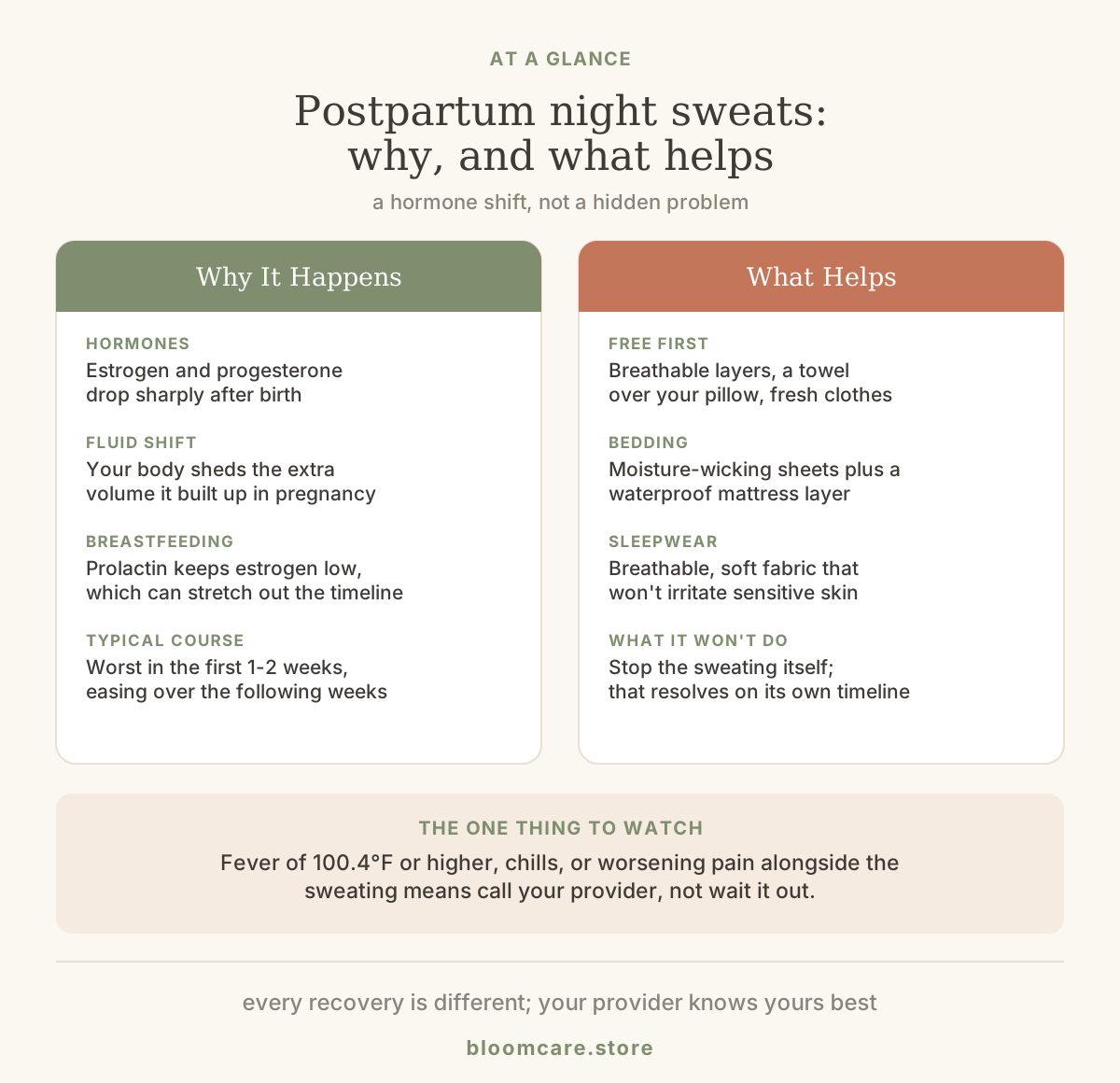
The short answer: postpartum night sweats happen because estrogen and progesterone drop sharply right after birth, which confuses your body's internal thermostat, and because your body is shedding the extra fluid it built up during pregnancy. Cleveland Clinic explains they're usually worst in the first couple of weeks and fade within a few weeks for most people, longer if you're breastfeeding.
What causes postpartum night sweats
The hormone drop is the main driver. Cleveland Clinic puts it plainly: low estrogen signals your hypothalamus, the part of your brain that regulates temperature, that you're overheated, so your body responds by sweating to cool down. That's postpartum hormones sweating in a nutshell: your internal thermostat is temporarily miscalibrated, not broken.
The second driver is fluid. Your blood volume increases by roughly 50% during pregnancy, and once you deliver, your body needs to get rid of that extra volume. Sweating, alongside more frequent urination, is one of the ways it does that.
If you're breastfeeding, expect the sweating to stick around a bit longer. Prolactin, the hormone that supports milk production, also keeps estrogen levels suppressed, which extends the same temperature-regulation confusion for as long as you're nursing.
your thermostat will recalibrate; it just needs a little more time than the rest of the internet implies
How long do postpartum night sweats last
For most people, night sweats are most intense in the first one to two weeks after delivery, then taper off over the following few weeks as hormones rebalance. Cleveland Clinic notes it generally takes a few weeks for hormone levels to readjust toward their pre-pregnancy baseline, and a separate Cleveland Clinic estimate puts the full window at about one to two months, give or take, for sweating in general.
Breastfeeding parents often see it linger closer to the longer end of that range, since prolactin keeps estrogen suppressed for as long as nursing continues. If night sweats are still heavy well past six weeks, or they come back after seeming to resolve, that's worth mentioning at your next appointment rather than assuming it'll sort itself out.
What actually helps
Before anything gets bought, the cheapest fix is free: Cleveland Clinic's own suggestions start with things like changing out of damp clothes, keeping a towel over your pillow, and dressing in breathable layers you can shed overnight. None of that costs anything, and it's worth trying first.
A quick, honest note: if you buy through links in this journal, BloomCare may earn a small commission, at no extra cost to you. Nobody pays for a place on our lists, and our research is done before we ever look at a link.
Where gear genuinely helps is reducing how often you wake up to a soaked bed in the first place. We looked at the pattern across thousands of reviews, including the one- and two-star ones, for each pick below.
Cooling sheets: Comfort Spaces Coolmax Moisture Wicking Sheet Set
What it is: A 4-piece sheet set (flat sheet, fitted sheet, 2 pillowcases) made from a Coolmax and polyester blend designed to pull moisture away from the skin and spread it across the fabric so it evaporates faster, per the listing.
What the reviews say: Across roughly 24,000 ratings, the most-repeated praise is practical: reviewers describe waking up damp instead of landing in a cold, soaked patch, since the fabric spreads moisture out instead of letting it pool. The honest complaint that repeats just as often is that a minority of reviewers feel the "cooling" claim is subtle at best, and the fitted sheet's shallow elastic can slip off the corners overnight.
Worth it if: you want a low-effort swap that makes a soaked bed less likely, not a guarantee that you won't sweat at all. Skip it if: you sleep on a thicker mattress; the shallow elastic pocket is worth measuring against your mattress depth first.
See the Comfort Spaces Coolmax moisture wicking sheet set
A waterproof layer underneath: SafeRest Waterproof Mattress Protector
What it is: A fitted, cotton-terry mattress protector with a waterproof polyurethane lining underneath, designed to stop fluid (sweat included) from reaching the mattress itself, machine washable, vinyl- and PVC-free per the listing.
What the reviews say: Across roughly 280,000 ratings, reviewers consistently describe it as quiet and comfortable rather than crinkly or plastic-feeling, with plenty specifically mentioning it for nighttime sweating. Amazon's own review synthesis flags water resistance as a genuinely mixed pattern: most reviewers say it fully blocks fluid, but a repeating minority feel it isn't quite as waterproof as advertised over time.
Worth it if: the sheets alone aren't cutting it and you'd rather protect the mattress underneath than replace it later. Skip it if: you're expecting a guaranteed seal against a heavy soak every single night; most reviewers report real protection, but it's not bulletproof for everyone.
See the SafeRest waterproof mattress protector
Breathable sleepwear: Kindred Bravely Davy Nursing Pajama Set
What it is: A bamboo-viscose nursing pajama set (94% viscose derived from bamboo, 6% spandex) with a double-layered, pull-down nursing top for feeds, plus pockets deep enough for a phone or burp cloth.
What the reviews say: Across roughly 682 ratings, reviewers consistently describe the bamboo fabric as exceptionally soft and cool against sore, sensitive postpartum skin, with several specifically calling out C-section comfort. The honest complaints: sizing runs inconsistent enough that "size up" advice doesn't land the same for everyone, and it costs more than a basic nursing pajama set.
Worth it if: what you're sleeping in matters as much as what you're sleeping on, especially if you're also nursing through the night. Skip it if: budget is tight right now; a basic breathable cotton pajama set covers the same core need for less.
See the Kindred Bravely Davy nursing pajama set
Recovering from a C-section instead of a vaginal birth doesn't change any of the above, hormones drop the same way regardless of delivery method, but if you want the fuller week-by-week picture of everything else that's healing alongside it, our C-section recovery timeline walks through what to expect at each stage.
Call your provider if…
Night sweats on their own are rarely a sign of anything serious. But Cleveland Clinic is specific that fever, chills, or pain alongside the sweating can point to an infection, and that's not a wait-and-see symptom.
The CDC's Hear Her campaign lists a fever of 100.4°F or higher as an urgent maternal warning sign, worth acting on any time in the year after delivery, not just the first few weeks. Call your provider right away if night sweats show up with:
- Fever of 100.4°F or higher, or chills
- Pain that's severe or getting worse, in your breasts, incision, or abdomen
- Redness, warmth, or discharge from a C-section incision or perineal tear
- Sweating that's still heavy well past six weeks, or that returns after resolving
None of these are yours to diagnose from a search bar, and calling is always the right move, even if it turns out to be nothing.
Questions mamas actually ask
How long do postpartum night sweats last?
For most people, the heaviest sweating happens in the first one to two weeks, easing over the following few weeks as hormones rebalance. Cleveland Clinic's estimate for postpartum sweating overall is about one to two months, and breastfeeding can stretch that timeline further since it keeps estrogen suppressed.
Is it normal to wake up completely drenched after birth?
Yes, this is genuinely common. Cleveland Clinic attributes it to the sharp hormone drop after delivery combined with your body shedding the extra fluid volume it carried during pregnancy. It's uncomfortable, but on its own it isn't a red flag.
Does breastfeeding make postpartum night sweats worse?
It can extend them, not necessarily intensify them. Prolactin, the hormone behind milk production, keeps estrogen levels lower for longer, which means the same hormone-driven sweating can continue as long as you're nursing.
Will cooling sheets actually stop night sweats?
They won't stop the sweating itself, since that's a hormonal process, but moisture-wicking sheets and a waterproof mattress layer can mean waking up in less of a soaked, cold puddle. Reviewers are honestly split on how noticeable the "cooling" sensation itself is; the more consistent benefit is moisture handling, not temperature change.
When should I actually worry about night sweats?
When they show up with fever, chills, or worsening pain, per the CDC's urgent maternal warning signs, or when heavy sweating hasn't let up well past six weeks. Otherwise, this is one of the more universal, least glamorous parts of the fourth trimester.
this part gets easier faster than almost anything else on the list
Keep reading
- The fourth trimester is real: what actually happens to your body after birth: the fuller, system-by-system picture this page is part of
- Postpartum bleeding, week by week: what's typical and what you'll need: another hormone-and-timeline-driven recovery pattern, mapped stage by stage
- C-section recovery, week by week: what to expect (and what helps at each stage): for the fuller recovery picture if a C-section is part of your story
Last reviewed: July 15, 2026 by the BloomCare Editorial Team. We re-review guides every 90 days.
Sources
continue reading
you might also like