Disposable vs. Reusable Nursing Pads: Which Actually Keeps You Dry?
Disposable, washable, and silicone nursing pads compared honestly: absorbency, comfort, and which type actually stops leaks through the day.

Quick summary
Disposable, washable, and silicone nursing pads compared honestly: absorbency, comfort, and which type actually stops leaks through the day.
Key takeaway
Take it one day at a time. You're doing better than you think.
The spirit
“It gets better, promise.”
BloomCare Editorial
Trusted pregnancy and postpartum educators
Nobody warns you that milk leaks. Not just during a feed, but between them: in the shower, at the grocery store, right as you're finally about to fall asleep. The disposable vs reusable nursing pads decision shows up fast, usually while you're standing in an aisle trying to make a call your exhausted brain doesn't have room for.
This is one small piece of a much bigger list. Our breastfeeding and pumping essentials checklist covers everything else you might need for feeding; here, we're going deep on just this one decision.
Short version: there's no single right answer, only the right answer for how you leak, how much laundry you can take on, and how your skin responds. We read the pattern across thousands of reviews on each type, including a third option most lists skip entirely, to lay out the honest tradeoffs.
BloomCare shares product research and education, not medical advice. Every recovery is different, and your provider knows yours best. For anything that worries you, that's always the right call.
Disposable vs. reusable vs. silicone nursing pads: at a glance
| Type | How it works | Care | Best for |
|---|---|---|---|
| Disposable | Absorbent core pad with adhesive strips that hold it in your bra | Toss after each use | Heavy leaking, travel, zero laundry bandwidth |
| Reusable (washable) | Absorbent fabric layers, most often bamboo viscose or cotton | Machine wash, air dry between wears | Steady daily use, softer feel against skin |
| Silicone | Non-absorbent barrier that holds gentle pressure on the nipple, so milk stays put | Hand wash with mild soap, air dry | Mild, predictable leaking, staying dry without wearing a pad at all |
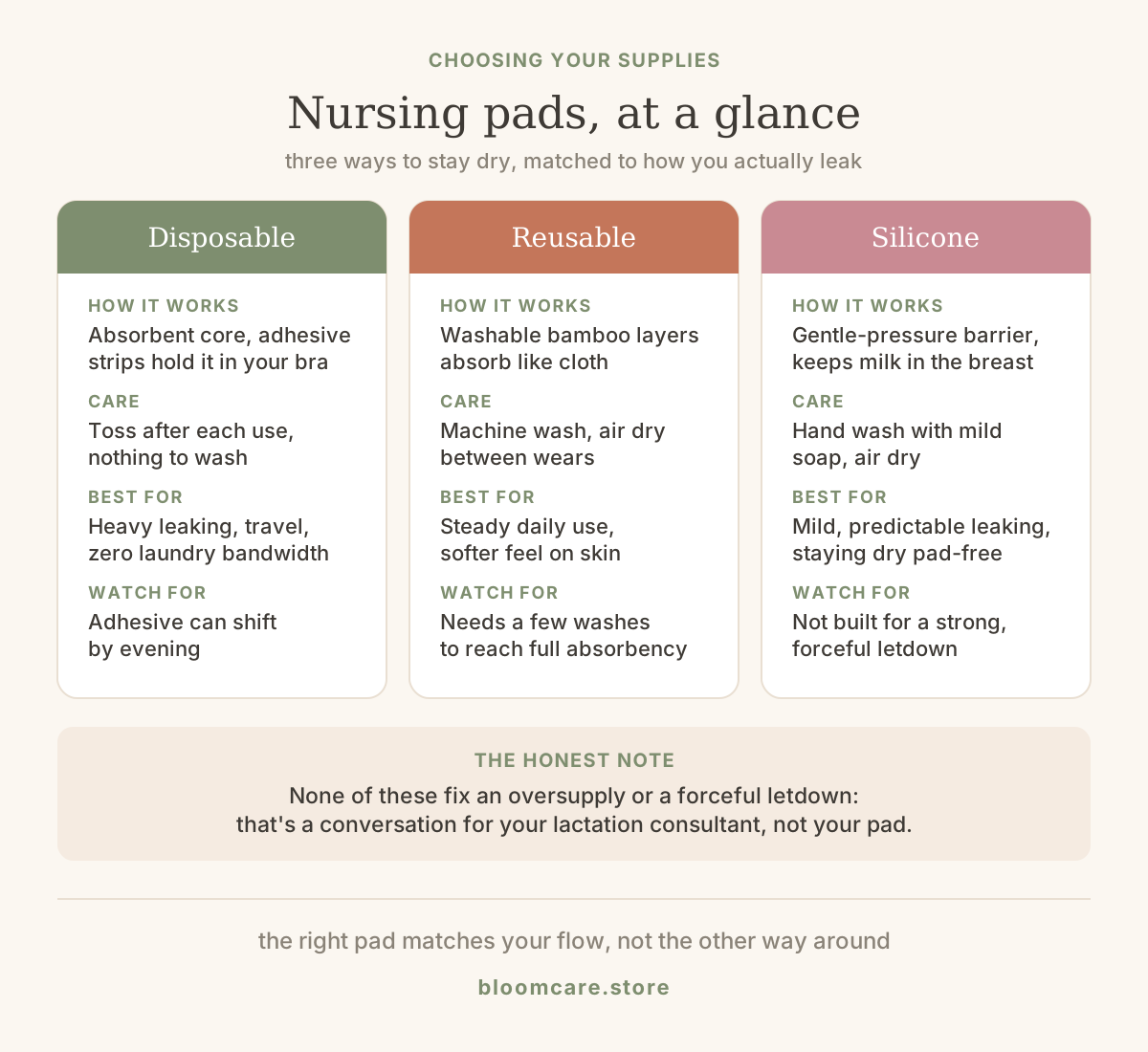
How we researched this
We don't take payment for a spot on this list, and nobody sees our draft before it's live. For each type below, we read the pattern across thousands of Amazon reviews, including the one- and two-star ones, and checked what reviewers actually report against what each listing claims. Most of what ranks for this decision right now comes straight from the brands selling the pads, which is worth knowing before you take a "best nursing pads" list at face value: a brand's own comparison rarely tells you when its own product is the wrong fit.
you don't have to get this exactly right on the first box
A quick, honest note: if you buy through links in this journal, BloomCare may earn a small commission, at no extra cost to you. Nobody pays for a place on our lists, and our research is done before we ever look at a link.
Disposable, reusable, and silicone nursing pads, reviewed
Disposable nursing pads
What it is: individually wrapped disposable pads with a contoured shape and adhesive strips to hold them in place inside a bra.
What the reviews say: across roughly 52,600 ratings, the dominant theme is strong absorbency through full feeding sessions and overnight wear without leaking through, and several reviewers with sensitive or already-sore nipples specifically call the surface gentle rather than irritating. The adhesive is a genuinely mixed pattern: most reviewers say it holds all day, but a repeating minority report it doesn't stick well and shifts out of place.
Worth it if: you want to change and toss without thinking twice, especially in the first chaotic weeks, or you're heading out and don't want to carry a wet bag for used pads.
Skip it if: you're home most of the day and would rather wash a small reusable set than restock disposables week after week.
See the Lansinoh disposable nursing pads
Reusable, washable nursing pads
What it is: a 10-count set (5 pairs) of contoured, organic bamboo-viscose pads with a waterproof backing layer, plus a carry bag for storing used ones until wash day.
What the reviews say: across roughly 15,500 ratings, the dominant theme is real, all-day-or-overnight absorbency without leaking through, plus a softness reviewers consistently prefer over disposable pads, including several who said they don't stick to skin or pump parts the way adhesive-backed disposables can. The honest complaints repeat too: a texture some describe as itchy once damp and drying, and a mixed pattern on fit, with some reviewers reporting the pads slide around inside the bra.
Worth it if: your leaking has settled into something predictable and you'd rather do a load of laundry than keep buying boxes.
Skip it if: you don't have the bandwidth to wash and dry a rotating set right now, or itchiness against damp skin sounds like a dealbreaker.
See the Kindred Bravely reusable nursing pads
Silicone nursing pads
What it is: a pair of thin, medical-grade silicone discs that press gently against the nipple and areola, forming a barrier that holds milk in rather than absorbing it.
What the reviews say: across roughly 1,900 ratings, reviewers who love these describe them as the only option that stopped visible leaking through their clothes entirely, and value not wearing anything damp against sore skin between feeds. The review pattern is genuinely split on leakage prevention itself: alongside the zero-leak reports, a repeating group describes milk pooling inside the dome or leaking through, especially overnight or with a strong letdown.
Worth it if: your leaking is mild to moderate and fairly predictable, and you like the idea of skipping pads altogether.
Skip it if: you have a strong or unpredictable letdown. Several long-term reviewers specifically say these aren't built for that and recommend them for home use or milder leaking instead.
One care detail worth knowing before you buy: several reviewers found that washing with regular soap wore down the stickiness far faster than the brand's recommended gentle wash, so the difference between "lasted months" and "lasted a week" in the reviews often comes down to how the pads were cleaned, not a flaw in the pads themselves.
See the LilyPadz silicone nursing pads
The nursing pads that actually don't leak (and who each one fits)
Nobody's flow, schedule, or skin is the same, so here's how we'd sort the decision by situation rather than by which product markets itself loudest.
If you're in the first chaotic weeks and leaking unpredictably: reach for disposables. You have enough to manage without adding a laundry rotation, and heavy, unpredictable leaking is exactly what they're built for.
If your supply has settled into a rhythm and you leak a predictable amount most days: reusable, washable pads are worth the switch. Less to restock as you go, and the softer feel is a real, repeated preference in the reviews.
If you want to stop thinking about pads entirely and your letdown is on the gentler side: silicone is worth trying, with the caveat that it's the option reviewers are most split on. Test it at home before you trust it out and about, or overnight.
If none of the above feels like it's working, and you're dealing with an oversupply or a forceful letdown that soaks through everything: that's a conversation for a lactation consultant or your provider about managing supply directly, not a pad problem to shop your way out of.
Most parents don't pick just one
Across the reviews, a repeating pattern is people settling into a mix rather than a single type:
- Disposables for the first heavy-leaking weeks and for travel, when convenience matters most.
- Reusable pads for home stretches once leaking is predictable, especially if sensitive skin makes the softer fabric worth the laundry.
- Silicone for days you want something fitted without a visible pad line, as long as your letdown isn't the forceful kind.
There's no rule that says you have to commit to one box and stay loyal to it for three months.
How many nursing pads do I need?
The CDC notes that your breasts may feel full and leak in the early weeks, and that the leaking tends to slow down over time as your body adjusts to breastfeeding. In practice, that means the first few weeks tend to be the heaviest: expect to change pads more often, and expect to go through more of whichever type you pick before things settle into a pattern.
There's no fixed number that works for everyone, so a smaller starter set, rather than committing fully to one type and one case size, is the least wasteful way to find your own pattern before you settle in. If you're pumping in addition to nursing, plan for more changes on pumping days. Cleveland Clinic notes that you may see milk drip or spray from the breast you're not actively feeding or pumping from during letdown, so a spare pad tends to get used even on a lighter day.
Questions mamas actually ask
Are washable breast pads worth it?
For steady, predictable leaking, yes: less to restock over time, and reviewers consistently rate them as softer against sore nipples than disposables. They're less worth it if you can't keep up with washing them, since a damp, unwashed reusable pad against the skin is worse than a fresh disposable one.
How many nursing pads do I need per day?
It varies with your flow and how often you're feeding or pumping, and tends to be highest in the first few weeks before your supply regulates. The CDC notes that leaking usually slows over time as your body adjusts, so it's reasonable to start with a smaller set of your preferred type rather than a large case.
Do silicone nursing pads actually work?
For mild to moderate, fairly predictable leaking, reviewers describe them as the option that stops visible leaks entirely. For a strong or unpredictable letdown, the review pattern is more mixed, with a repeating group reporting milk pooling or leaking through, especially overnight.
Is it normal for a nursing pad to feel wet or itchy?
Some dampness against the skin is common with absorbent pads worn for several hours, especially disposables. Persistent irritation, or breastfeeding pain that doesn't improve over your first one to two weeks, is worth mentioning to a lactation consultant or your provider, per the CDC's guidance on sore nipples and breastfeeding pain.
When can I stop wearing nursing pads?
Once your milk supply regulates and leaking slows down, which the CDC describes as a gradual process as your body adjusts to breastfeeding, not a fixed date. Many parents keep a few on hand well past the early weeks for occasional letdown at inconvenient moments.
Keep reading
- Breastfeeding and pumping essentials: what you need, what can wait: the full checklist this comparison is part of
- The fourth trimester is real: what actually happens to your body after birth: the wider picture of what your body is adjusting to right now
- Postpartum bleeding, week by week: what's typical and what you'll need: the other fluid-management question nobody warns you about
Last reviewed: July 14, 2026 by the BloomCare Editorial Team. We re-review guides every 90 days.
Sources
continue reading
you might also like