The Hospital Bag, Mom Edition: What You'll Actually Use (and What the Hospital Provides)
Most hospital bag checklists are baby-heavy. Ours is for mom: what's worth packing, what your hospital already provides, and what to leave home.
Quick summary
Most hospital bag checklists are baby-heavy. Ours is for mom: what's worth packing, what your hospital already provides, and what to leave home.
Key takeaway
Take it one day at a time. You're doing better than you think.
The spirit
“It gets better, promise.”
BloomCare Editorial
Trusted pregnancy and postpartum educators
Search "hospital bag checklist for mom" and you'll mostly find baby's packing list with a few mom items squeezed in as an afterthought: a phone charger, maybe a robe. The onesies get their own section. Your own recovery gets a bullet point.
This is the other version. Everything below is about what you need for labor, delivery, and the first few days of recovery, organized by what's actually worth packing versus what your hospital is already handing you the moment you check in.
Here's the short version up front: hospitals send new parents home with more supplies than most checklists admit. A basic peri bottle, mesh underwear, ice packs, heavy pads, even a hospital gown. Your job isn't to duplicate all of it. It's to bring the handful of things that make a multi-day stay in someone else's building feel less like camping in a waiting room.
BloomCare shares product research and education, not medical advice. Every recovery is different, and your provider knows yours best. For anything that worries you, that's always the right call.
This hospital bag checklist for mom is the hub for our planning and gifting guides. If you're closer to your due date than to a shopping cart, our postpartum recovery kit checklist covers what comes home with you, and if a C-section is on the calendar, our C-section recovery kit is the deeper version of everything below.
What does the hospital provide?
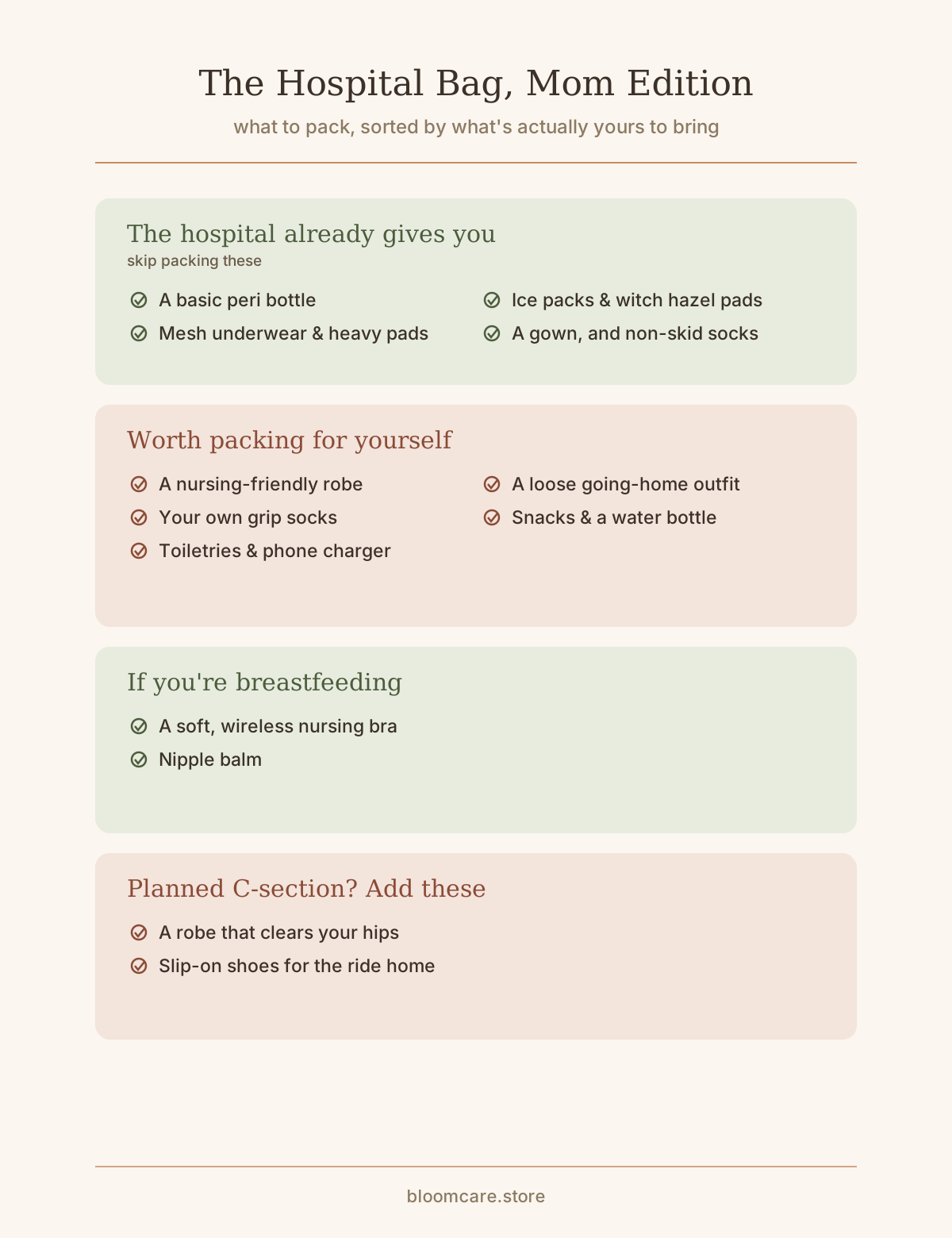
This is the question most checklists skip, and it's the one that saves you the most overpacking. Hospitals routinely send you home with (and let you use during your stay):
- A basic peri bottle for perineal rinsing
- Mesh underwear and heavy-duty postpartum pads
- Ice packs for the first 24 hours
- Witch hazel pads
- A hospital gown, and usually a pair of non-skid socks
- Basic pain management, monitored by your care team
None of that needs to come with you. What's missing from that list is everything that makes the stay feel like yours: your own clothes, your own toiletries, and a few comfort items the hospital was never going to provide.
The hospital bag checklist for mom
Here are the hospital bag essentials for mom, all in one place and organized by category. The "why" for each one is below.
Clothing
- A nursing-friendly robe or gown
- Your own grip socks
- A loose, comfortable going-home outfit
- Slip-on shoes (especially useful after a C-section)
Comfort and personal care
- Travel-size toiletries and your own pillow, if you have room
- Phone charger, with a long cord
- Snacks and a refillable water bottle
- Lip balm and hair ties
If you're breastfeeding
- A soft, wireless nursing bra
- Nipple balm
If you have a planned C-section
- A robe that clears your hips and doesn't press on the incision line
- Slip-on shoes for the ride home, since bending to tie laces is uncomfortable in the first days
That's the shape of it. Below is the why, the honest trade-offs on the pieces worth buying rather than borrowing, and what does double duty once you're home.
How we researched this
Nobody pays for a spot on this list, and we don't take sponsorships. For every product below, we read the pattern across hundreds to thousands of Amazon reviews, including the one- and two-star ones, and cross-checked that pattern against what the listing itself actually claims. Facts about each product come from its own listing; the verdicts come from that review pattern.
let's fix that
A quick, honest note: if you buy through links in this journal, BloomCare may earn a small commission, at no extra cost to you. Nobody pays for a place on our lists, and our research is done before we ever look at a link.
Clothing: what to pack in hospital bag for mom
A nursing-friendly robe and gown. A standard-issue hospital gown does the job, but it isn't built for you specifically: it opens in the back, it's thin, and it isn't designed for nursing or for the frequent belly checks nurses do after delivery.
What it is: a two-piece set: a sleeveless crossover nursing gown with a split front flap at the hem, plus a matching long-sleeve wrap robe with inner and outer belt ties and hidden side pockets. What the reviews say: across roughly 1,040 ratings, reviewers consistently say the crossover design makes nursing and the frequent postpartum belly and incision checks hospital staff perform much easier than a standard gown, without needing to expose more than necessary. The robe gets specific praise for hallway recovery walks and for warmth when hospital rooms run cold. One reviewer noted the dye bled onto other laundry on the first wash, so it's worth washing separately the first couple of times. Worth it if: you want something that photographs and feels better than a hospital gown, works for nursing, and doesn't fight the staff checks that happen constantly in the first 24 hours. Skip it if: you already own a nursing-friendly nightgown and just want a standalone robe, since this comes as a set.
See the Ekouaer maternity nursing gown and robe set
Your own grip socks. Hospitals provide non-skid socks, but they're famously thin, scratchy, and one-size-fits-none.
What it is: a 4-pair pack of fuzzy, crew-length non-slip socks with a silicone dot grip pattern on the sole and a soft, non-compressive elastic cuff. What the reviews say: across roughly 91 ratings, the consistent praise is real grip on smooth floors without the ankle squeeze of compression socks, several reviewers specifically buying them as a softer alternative to a hospital's own gripper socks. Most of the visible review base describes general home or caregiving use rather than a hospital stay specifically, which is an honest gap rather than a functional complaint. Worth it if: cold or slippery floors bother you, or you'd rather have four fresh pairs than rewear one hospital-issued pair for days. Skip it if: the free hospital pair is genuinely fine with you and floors aren't a concern.
See the Juedverty non-slip grip socks
A going-home outfit. Pack something loose you already own rather than buying new: soft waistband, nothing that presses on a healing belly, and nothing you'd mind if it got a little bled on. This is one of the few genuinely "whatever you already have works" items on this whole list.
Slip-on shoes. Bending down to tie laces is uncomfortable in the first days home, especially after a C-section. Anything you can step into works.
Comfort and personal care: what's worth packing
The rest of this category is less about products and more about not forgetting the boring things.
Travel-size toiletries. Bring your own toothbrush, toothpaste, deodorant, and hairbrush. The hospital can supply the basics, but your own products make a multi-day stay feel less like an emergency and more like a (very strange) hotel visit.
Phone charger. Pack a long cord specifically. Hospital outlets are rarely next to the bed, and you'll want your phone within reach without unplugging it every time you move.
Snacks and a water bottle. Labor and recovery both take longer than anyone expects, and hospital food service doesn't run on your schedule. A refillable water bottle also means you're not waiting on a nurse every time you're thirsty.
Your own pillow. Optional, but if you have room, a pillow from home in a different-colored pillowcase (so it doesn't get mixed up with hospital linens) is one of the most-repeated "wish I'd packed that" comments from mamas who didn't.
If you decide you want more than the free peri bottle, mesh underwear, and pads the hospital sends you home with, our peri bottle comparison and our disposable underwear, pads, and mesh comparison cover the upgrades directly. Neither is a hospital bag necessity: both are things you can buy after you're home and see what you actually want more of.
If you're breastfeeding
Skip this section if you're not: nothing here applies to formula-feeding families.
The CDC notes that nipple soreness is common in the first one to two weeks as you and your baby adjust, and that your milk typically doesn't come in (moving from colostrum to fuller milk) until about three days after birth, sometimes longer for first-time moms. None of that requires anything fancy in your bag: just two small things.
A soft, wireless nursing bra.
What it is: a seamless, wire-free nursing bra sold in 3-pack or 5-pack color sets, with a criss-cross front so the shoulder straps slide aside for nursing without unhooking anything. What the reviews say: across roughly 6,434 ratings, the dominant theme is genuine comfort against sensitive postpartum skin and real overnight wearability. Amazon's own review synthesis flags support as a mixed pattern: several reviewers, especially larger-chested ones, describe the band stretching out and losing support within a day, and the removable pads (not sewn into a pocket) shift or bunch for a repeating group. Worth it if: you want something soft to sleep and nurse in for the hospital stay and the laundry-light first weeks home, and a multi-pack means a fresh one every day without washing mid-stay. Skip it if: you're larger-chested and want structured all-day support, or you already have a nursing bra brand you trust.
See the HBselect wireless nursing sleep bra, 3-pack
Nipple balm.
What it is: a single-ingredient, ultra-purified lanolin balm, safe to leave on during a feed with no need to wipe off first. What the reviews say: across roughly 54,000 ratings, the pattern is consistent: fast, real relief for sore or cracked nipples, often noticeable after the first use. The recurring split is texture preference, not effectiveness: some reviewers love the thick, protective feel, others find it heavier than they'd like. Worth it if: you want the most-reviewed, most doctor-recommended option and don't have a lanolin sensitivity. Skip it if: you have a wool or lanolin allergy: a lanolin-free cream is the better fit, and if soreness doesn't improve after the first couple of weeks, the CDC's guidance is to talk with a lactation consultant rather than reach for a stronger cream.
See the Lansinoh lanolin nipple cream
Packing ahead for a planned C-section
A C-section changes a couple of specific things about your hospital bag for labor and postpartum, on top of everything above. Federal law guarantees insurance coverage for at least a 48-hour hospital stay after a vaginal delivery, and at least 96 hours after a cesarean, so a planned C-section usually means packing for a longer stay than a vaginal birth, even though either can end up shorter if you and your provider agree.
The short list: a robe that clears your hips and doesn't sit directly on the incision line (the wrap-style robe above works for this too), and slip-on shoes for the ride home, since bending to reach laces is genuinely uncomfortable in the first days. ACOG's postpartum pain guidance covers incision-specific pain management directly, and it's worth reading before you assume over-the-counter relief is your only option.
Recovering from a C-section instead of (or in addition to) a vaginal birth? Our C-section recovery kit is the complete checklist for what comes home with you, and our C-section recovery timeline walks through what to expect week by week, cited throughout.
What to leave at home
A few things that show up on baby-focused hospital bag checklists but aren't worth your suitcase space: a going-home outfit for a newborn in three different sizes "just in case" (bring one, hospitals rarely let you leave before your baby is a day or two old, sizing is more predictable by then), a full skincare routine you won't have the energy for, and anything you'd be devastated to lose track of in a shared hospital room. If you're the kind of planner who wants the honest "don't bother" list for the rest of your recovery kit too, our postpartum products you can skip guide covers it directly.
When to pack your hospital bag
Most guidance lands around 36 to 38 weeks: early enough that a surprise early labor doesn't catch you unpacked, late enough that you're not staring at a packed bag for two months. If your pregnancy is considered higher-risk or your provider has flagged a higher chance of early labor, ask them directly whether packing sooner makes sense for you.
Questions mamas actually ask
What does the hospital actually provide for mom?
A basic peri bottle, mesh underwear, heavy postpartum pads, ice packs, witch hazel pads, a hospital gown, and usually non-skid socks. Pain management is handled and monitored by your care team. None of that needs to be duplicated in your hospital bag; pack around it instead.
How many days' worth of clothes should I pack?
Federal law guarantees coverage for at least 48 hours after a vaginal delivery and at least 96 hours after a C-section, so plan for a stay in that range. One robe and a couple of nursing bras cover most of it since you'll likely wear a hospital gown for the medical parts of your stay anyway.
Do I need a going-home outfit that fits my pre-pregnancy size?
No. Your body doesn't return to its pre-pregnancy size in the day or two after birth, and packing something snug just adds discomfort to a day that already has enough happening. Loose and soft beats "flattering" for this specific outfit.
What's different about my hospital bag if I'm having a C-section?
Mainly the length of stay and what sits near your incision: a robe that clears your hips instead of pressing on the incision line, and slip-on shoes since bending to tie laces is uncomfortable in the first days. Our C-section recovery kit covers the rest of what a C-section changes about recovery.
When should I call my doctor instead of just packing through discomfort?
Always, if something feels seriously wrong to you. Specifically, the CDC's urgent maternal warning signs include a fever of 100.4°F or higher, heavy bleeding that soaks through a pad in an hour, severe swelling in your hands or face, and severe belly pain that doesn't ease up. None of those are a wait-and-see situation, whether you're still in the hospital or already home.
Keep reading
- Perineal care after birth: a gentle, complete guide to healing: the full recovery routine for after this bag comes home with you
- C-section recovery, week by week: what to expect and what helps: if a C-section is part of your story, start here
- The postpartum care package: a gift guide that actually helps her heal: for whoever's helping you pack, or wants to help after
Last reviewed: July 15, 2026 by the BloomCare Editorial Team. We re-review guides every 90 days.
Sources
continue reading
you might also like